
The First Meal of the Day: A History of Breakfast

I don’t eat breakfast, but all my life, friends and family have told me not to skip the “most important” meal of the day. How did this first meal become so essential?
Breakfast seems so natural, something humans have always done. Wake up, eat, drink something hot, and get on with your day.
Except… it wasn’t always the case. For much of human history, breakfast wasn’t necessarily essential at all.
In some cultures, the first meal was nothing more than a piece of bread. In others, porridge, leftovers, rice, fish, beans, or a bowl of soup. In parts of medieval Europe, eating early in the morning could be viewed as a sign of weakness or indulgence.
Today, we’re surrounded by a huge variety of refined breakfast choices like avocado toast, Eggs Benedict, or smoothies. Along with fancy coffees. Most of these items cost more than ancient Romans would spend on daily meals.
How did we end up eating breakfast? What did people eat when they woke up hundreds of thousands of years ago? Let me take you on a food culture journey, and let’s find out.
*This post contains affiliate links. If you make a purchase through these links, I may earn a small commission at no additional cost to you. I earn from qualifying purchases. Thank you for supporting this site and helping me keep ancient food stories alive. Learn more.*
Breakfast in Antiquity
The word breakfast means to break the fast, the fast that happens during the long hours we’re sleeping.
But people didn’t always think of the morning meal as an essential part of the day.
The Romans called their morning meal ientaculum, a generally simple meal consisting of bread, cheese, or fruit. The Romans also ate prandium, a light midday meal, while the big meal of the day, cena, was eaten in the late afternoon or evening. This practice still exists today.
Getting up and immediately sitting down to a huge breakfast would have seemed rather unorthodox back then. Romans had strong ideas about digestion and gluttony. Eating too much could be viewed as unhealthy and morally questionable. Does this sound familiar?
For other ordinary cultures like the ancient Mediterraneans, grains were fundamental. Bread, porridge, olives, fruit, cheese, and other simple foods made up much of the daily diet.
Without refrigeration, food choices were seasonal and repetitive. Breakfast wasn’t necessarily a separate category.
Leftovers became the next meal. Bread would supplement leftovers. A simple grain porridge would start the day and end it the next.
The Romans even had their own version of fast food. Thermopolia were street establishments where people could buy prepared hot food. Like us today, ancient city dwellers didn’t always cook every meal at home.
Breakfast in the Middle Ages
In medieval Europe, people ate their first big meal later in the morning. They typically ate it after working in the fields or doing heavy chores for a few hours.
Breakfast had a curious reputation. In some Christian traditions, eating too early was seen as gluttony. The meal was considered unnecessary for healthy adults. Historical records suggest people often skipped breakfast.
Yet people absolutely ate in the morning.
Monks, children, travelers, laborers, the elderly, and the sick all had reasons to eat early. If you were awake since dawn and spent hours working in a field, waiting until late morning to eat wasn’t particularly practical.
A simple medieval breakfast consisted of bread and ale, leftovers, or whatever was available. At an English medieval castle, for example, they served bread and wine before the main meal, which was around 10 a.m. to noon.
Medieval breakfast was not the main meal for everyone.
When Did Breakfast Become a Real Meal?
Changes happened as work life changed. Farmers and laborers who started their days early needed food for fuel. Workers could expect a morning meal before heading into long days of physical labor.
By the 16th century, breakfast was becoming increasingly accepted among European elites. Eventually, a meal resembling our modern three-meal structure began to take shape.
Industrialization cemented our way of life.
Factories, offices, trains, and increasingly rigid working schedules created something humans didn’t know they needed:
A Time and a Schedule to Eat.
Breakfast became the essential piece of this timeline. You woke up. You ate. You went to work. And bingo, the first meal of the day was a necessity.
The BIG American Breakfast
Early American meals weren’t like today’s breakfast.
In colonial America, people often ate their main meal around midday. Farmers and laborers might eat early because they were already working. Wealthier people slept in and ate later.
Breakfast and supper were informal meals made up of leftovers, cornmeal mush, and bread. Over time, however, breakfast became increasingly standardized. And then America did what America does really well.
Breakfast Turned into an Industry
Cereal manufacturers, advertisers, packaged foods, and convenience stores transformed the morning meal. Breakfast came out of a box.
Now there are rules about what breakfast should be.
- Milk and cereal.
- Toast.
- Eggs.
- Bacon.
- Orange juice.
- Coffee.
And eventually the idea that breakfast was “the most important meal of the day.” But that famous phrase is much more modern than most people realize. Today’s notion of breakfast as an essential daily ritual reflects changing lifestyles, food marketing, and cultural habits.
We Don’t All Agree on Breakfast
Travel around the world, and you’ll find breakfast isn’t a universal morning meal.
In Japan, a traditional breakfast includes rice, miso soup, grilled fish, pickles and eggs.
In southern India, breakfast might mean idli, steamed fermented rice and lentil cakes, with chutney and sambar.
In Turkey, breakfast can be a glorious spread of cheese, olives, tomatoes, eggs, honey, cream and bread.
In Singapore, kaya toast comes with soft-boiled eggs and sweet coffee.
And in Thailand, breakfast might be a steaming bowl of jok, a rice porridge often served with pork or shrimp.
This is wonderfully delicious.
In some countries, breakfast is sweet. In others, it’s savory. Here’s the beauty of universal tradition and the very reason I love writing about these topics.
- Some cultures eat soup.
- Some eat fish.
- Some eat rice.
- Some eat beans.
- Some eat bread and cheese.
- And some people drink coffee and call it breakfast.
Breakfast around the World
Japan
When I traveled to Japan, breakfast was a whole other adventure, different from your typical American plate. Rice, miso soup, grilled fish, pickled vegetables, and eggs are common components.
India
India has an enormous variety of regional breakfasts.
When we went to Kerala in the south, we ate fermented staples such as idli and dosa. Idli is made from fermented rice and black gram batter and steamed until soft and spongy.
And then there are savory porridges, flatbreads, poha, parathas, and countless regional specialties.
Breakfast is seriously delicious.
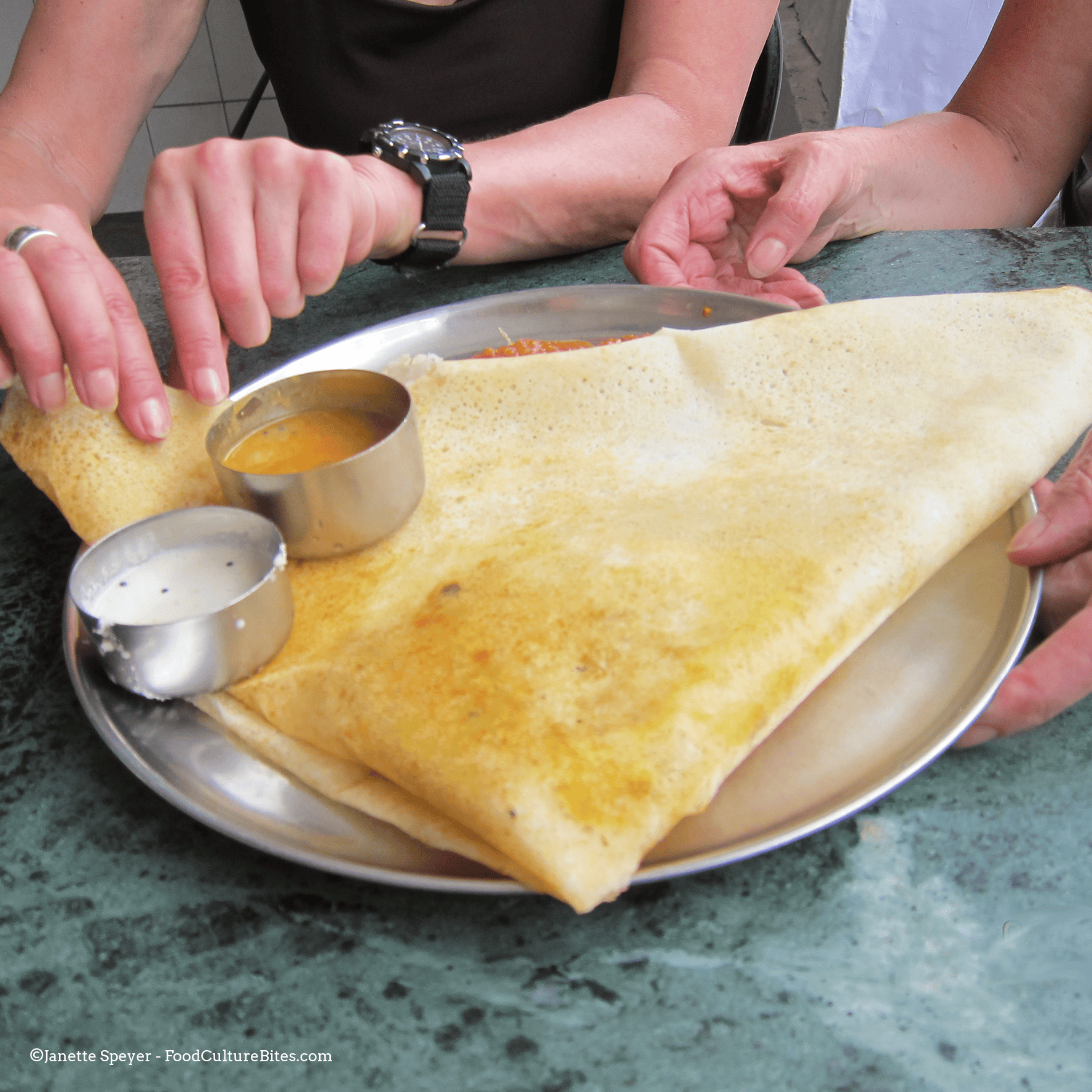
Breakfast Food – Indian Dosa
Turkey
Istanbul offered us kahvaltı, a delightful spread of bread, cheese, olives, tomatoes, cucumbers, eggs, honey, and cream. Totally irresistible. Now you are not grabbing and eating; you are sitting down and enjoying it.
Singapore
I haven’t tried this one yet. Kaya toast is toast spread with kaya, a sweet coconut-and-egg jam flavored with pandan, served with soft-boiled eggs and coffee. It’s a breakfast that reflects Singapore’s blend of Malay, Chinese, and other culinary influences.
Germany
In Hamburg, breakfast includes fish. The city’s famous fish market offers fischbrötchen, a fish sandwich traditionally eaten by locals and marketgoers.
So What Is Breakfast, Anyway?
The first meal of the day was porridge, bread, fish, rice, beans, soup, leftovers, fruit, cheese, eggs, or nothing.
Breakfast tells us a lot about the societies that eat it. What are we going to eat before we start the day?
And maybe that’s why breakfast culture is so fascinating. It isn’t just the first meal of the day. It’s a little edible snapshot of the world we live in.
So maybe I’m not really skipping breakfast after all. I’m simply following one of the oldest eating habits in the book: waiting for the first meal of the day.
Explore more in our Food Spotlights or subscribe to our newsletter for weekly stories and recipes inspired by history. Taste the rest of the story.
Selected Sources and Further Reading
- World History Encyclopedia — Food in the Roman World
- World History Encyclopedia — Food in an English Medieval Castle
- Smithsonian Magazine — Why Do We Eat Cereal For Breakfast? And Other Questions About American Meals Answered
- National Geographic — Your Shot: Breakfast Around The World
Note to my readers:
My research draws on travel experiences, books, and, sometimes, AI tools. I love using my own photos whenever possible, but occasionally I include stock or AI-generated images to help illustrate the story.
Still Intrigued By The Menu?
Subscribe to our newsletter for the freshest bites of food history, culture, and exclusive features.
Still hungry for history?
Let’s Connect
About Food Culture Bites
Food Culture Bites is a food history and culture website dedicated to exploring how food becomes identity. We tell the stories behind the dishes and traditions that shape past and present communities. Read more.>
Meet Janette Speyer

Behind every bite, there’s a story. Join me on a journey through history to explore how centuries of culture have shaped the way we eat. Read More >
Meet Bob Speyer

Bob Speyer is a writer and contributor to Food Culture Bites, bringing a lifetime of global experience, storytelling, and cultural insight to the publication. Having traveled to more than 60 countries, Bob writes with a deep appreciation for how history, food, and human connection intersect across cultures. Read More >