The 200-Year History of “Health Food”
After trying to eat healthy all my life, I’ve concluded that health food is more about what we think is good for us.
Today, “health food” is everywhere, in any supermarket, restaurant, or coffee shop. Everyone is health-conscious, and why shouldn’t we be? We all look for foods promising something better. Organic, natural, whole grain, plant-based, probiotic, high-protein, high-fiber, minimally processed. We have turned eating into something of a science project and, many times, a moral one.
But the idea that food can make us healthier is not new.
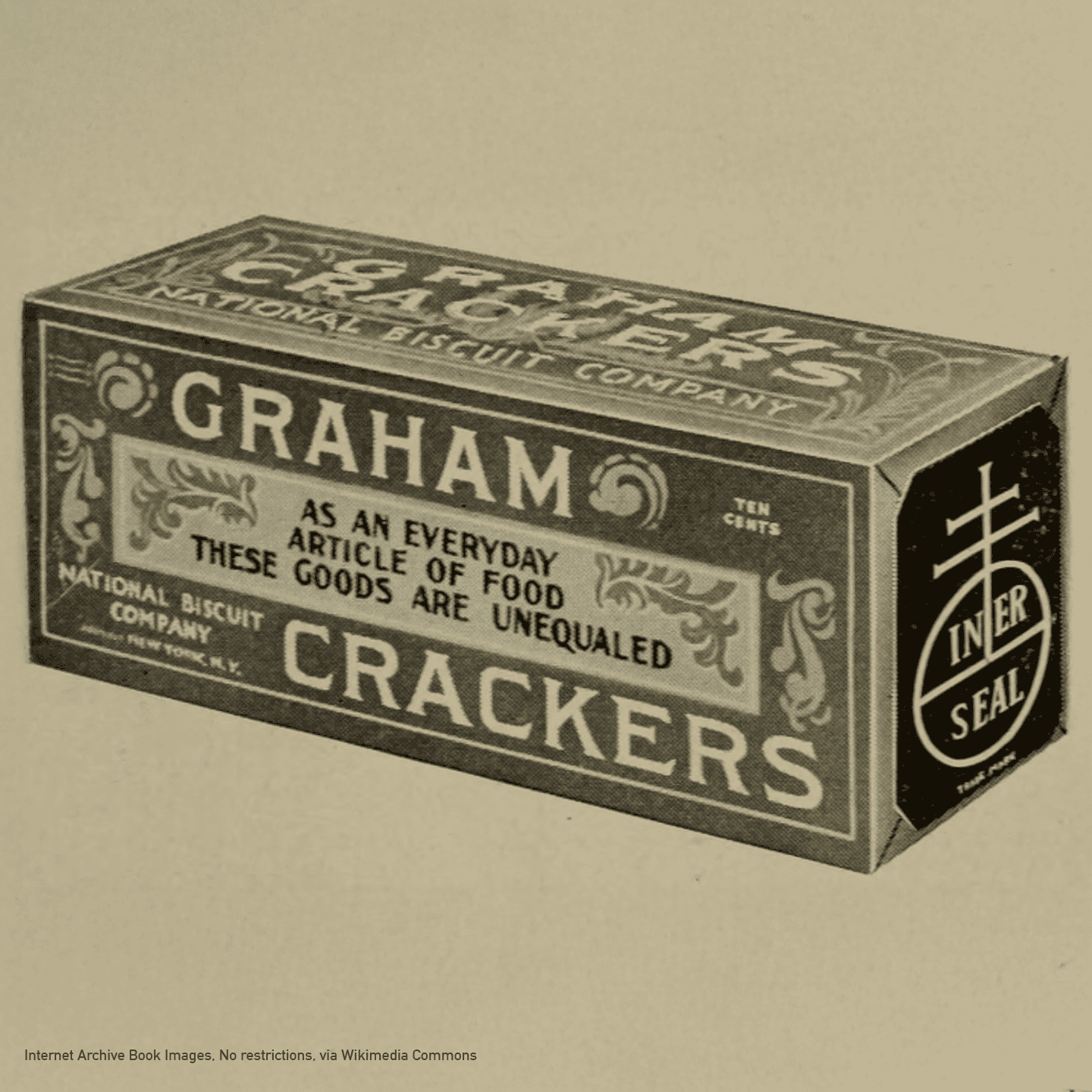
In fact, the American health-food movement began nearly 200 years ago, with a minister, a theory, and a cracker. If you follow the story from the graham cracker to today’s organic aisles, the definition of “healthy” keeps changing. So does our idea of what makes food safe.
Because here’s the irony. A food can be nutritious and organic, yet still become contaminated. So let’s find out what health food is, and why we’ve spent two centuries chasing it. And what we’ve learned along the way.
Let’s get started with a cracker.
*This post contains affiliate links. If you make a purchase through these links, I may earn a small commission at no additional cost to you. I earn from qualifying purchases. Thank you for supporting this site and helping me keep ancient food stories alive. Learn more.*
A Minister, with a Theory of Morality
In the 1830s, Presbyterian minister Sylvester Graham observed the American diet and felt it needed a makeover. Graham believed that diet wasn’t just about the body. It was about the soul. Eat badly, he argued, and you’d corrupt more than your digestion.
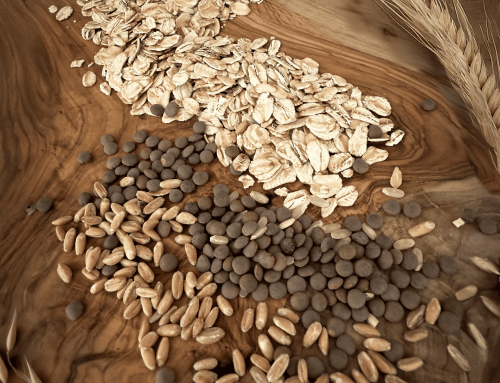
His simple food regimen included whole-wheat bread and a mostly vegetarian diet. Some of his ideas sound almost boringly sensible today: eat less processed food, favor whole grains, avoid excess. For Graham, food discipline and moral discipline were one and the same. His followers, known as Grahamites, made it a lifestyle.
That’s the graham cracker we all know from cheesecake.
The Birth of the Health Food Business
Decades later, John Harvey Kellogg picked up where Graham left off. He took it somewhere Graham never could have imagined: the marketplace.
Kellogg ran the Battle Creek Sanitarium in Michigan, a health institution built around the idea that diet, exercise, and lifestyle were the pillars of good health. Also a vegetarian, Kellogg preached what he called “biological living.” The sanitarium observed a tightly controlled diet designed to support digestion and overall wellness.
Mr. Kellogg was way ahead of his time. We are only just scratching the surface of gut health today. His experiments eventually helped produce a breakfast cereal that became a household name. A movement that distrusted modern food manufacturing had helped create a modern food industry of its own.
That contradiction keeps repeating itself.
The Co-ops of the 1960s and ’70s
By the mid-20th century, “health food” had reinvented itself again. The counterculture of the 1960s and ’70s pushed back against an increasingly industrialized food supply. They embraced natural foods, vegetarianism, whole grains, and organic farming.
Health-food stores and co-ops popped up as alternatives to the ordinary supermarket. Many carried items that felt exotic, such as brown rice, tofu, granola, sprouts, whole-grain bread, and yogurt. Some were traditional foods from other cultures that American consumers were discovering for the first time. Others were new spins on old ideas.
The common thread was a suspicion of heavily processed foods and a deep longing to get closer to something natural. Once again, what you ate became a statement. What was on your plate said something about who you were, a philosophy as much as a meal.
Organic: An Alternative to Industrialization
The organic movement added another layer to the story. Organic food was positioned as an answer to industrial agriculture, closely tied to farming practices, soil health, and concerns about chemical inputs.
Today, organic feels as though it has always been part of the supermarket landscape. But organic and healthy were never actually synonyms.
I’ve been working with organic food clients for years. Here’s what I learned: organic describes how a food is grown. It doesn’t necessarily mean the food is nutritionally superior, and certainly doesn’t mean it’s free of contamination. Organic foods still have to meet food-safety and labeling standards, just like everything else. Those labels are scrutinized and don’t come cheap for the manufacturer.
Which brings us to an uncomfortable question.
Can Health Food Make You Sick?
We automatically tend to sort food into moral categories. Processed feels suspicious. Fresh feels virtuous. Organic feels safe. A handful of blueberries feels like the platonic ideal of healthy eating.
But food safety doesn’t follow those categories.
Fresh fruits and vegetables can carry bacteria, viruses, or parasites. No one’s fault, but contamination can happen at any point along the chain: in the field, through the water supply, during harvesting, processing, transport, or even in our own kitchens.
Recently, that lesson showed up in an unlikely place: frozen organic blueberries. An E. coli outbreak was traced to recalled organic frozen blueberries and mixed berries. Consumers were told to stop eating the affected products while the investigation continued.
That risk played out again just months later, in an even more sobering example: an outbreak linked to iceberg lettuce sickened more than 11,000 people across twenty states.
Lettuce?
It’s one of the ultimate symbols of virtuous eating, the thing you’re supposed to have more of. Yet it became the source of one of the largest foodborne outbreaks in recent memory. Investigators even had to work through a false-positive lab result before confirming the source. If a plain bag of lettuce can carry that kind of risk, the lesson from the blueberries wasn’t a fluke. It’s a pattern.
The takeaway isn’t that organic blueberries or lettuce are dangerous. They aren’t. The takeaway is simpler and more important: organic doesn’t mean bacteria-proof. A food doesn’t have to be unhealthy to become contaminated. Bacteria don’t check whether something came from a health-food store or the supermarket next door.
The Same Idea, Packaged Differently
Look at a modern supermarket, and you can trace almost the entire history of health food in a single aisle. Whole grains are back. Fermented foods are trendy. Plant-based eating is mainstream. Protein is a selling point. Fiber is having a fibermaxxing moment. Ancient grains have returned.
Foods once considered strictly “health food,” like tofu and kefir, are now just everyday foods. We keep circling back to the same basic conviction: food matters. Every generation adds its own label.
Graham thought the answer was simple food and restraint. Kellogg believed diet could reshape the body itself. The counterculture looked to natural, minimally processed foods. The organic movement tied food to farming and the environment. Today we talk about gut health, probiotics, protein, fiber, inflammation, and personalized nutrition.
Different vocabulary, different foods on the plate, but the same instincts.
There’s no magic food. There’s just food, and the endlessly fascinating human story we keep building around it. Maybe that’s the healthiest way to approach what’s on your plate: a little curiosity instead of fear, a little skepticism instead of certainty.
Because even something as ordinary as a graham cracker has a story worth telling.
Explore more in our Food Spotlights or subscribe to our newsletter for weekly stories and recipes inspired by history. Taste the rest of the story.
Selected Sources and Further Reading
- Science History Institute: A Recipe for Good Health
- Gilder Lehrman Institute of American History – Sylvester Graham and Antebellum Diet Reform
- U.S. Food and Drug Administration (FDA.gov) – Investigations Foodborne Illness Outbreaks
Note to my readers:
My research draws on travel experiences, books, and, sometimes, AI tools. I love using my own photos whenever possible, but occasionally I include stock or AI-generated images to help illustrate the story.
Still Intrigued By The Menu?
Subscribe to our newsletter for the freshest bites of food history, culture, and exclusive features.
Still hungry for history?

Let’s Connect
About Food Culture Bites
Food Culture Bites is a food history and culture website dedicated to exploring how food becomes identity. We tell the stories behind the dishes and traditions that shape past and present communities. Read more.>
Meet Janette Speyer

Behind every bite, there’s a story. Join me on a journey through history to explore how centuries of culture have shaped the way we eat. Read More >
Meet Bob Speyer

Bob Speyer is a writer and contributor to Food Culture Bites, bringing a lifetime of global experience, storytelling, and cultural insight to the publication. Having traveled to more than 60 countries, Bob writes with a deep appreciation for how history, food, and human connection intersect across cultures. Read More >