
Do You Have the Stomach for These Bizarre British Delicacies?
England has a long, colorful history filled with the odd, the unconventional (by today’s standards), and the edible. Join me on a gastronomic tour of Bizarre British Delicacies, exploring the curious, sometimes downright peculiar foods that once graced the tables of Ye Olde England. From forgotten recipes to unexpected ingredients, these tastes and traditions make Britain’s culinary past so fascinating.
A Kingly Liquor to Drink While Driving
King Edward VII was 62 when he took the throne from his Queen Mum – Victoria. Elderly and overweight, he still partied hard and loved driving in his topless Daimler, exposed to the harsh English weather. His physicians worried about his health and created a fortifying beverage to keep the King warm. It became known as the King’s Ginger, a brandy-based elixir, and he filled his driving flask to the brim. In 2011, it was reconstituted and available to the masses. It’s 82 proof; only a few sips are needed to get your engine revving!
*This post contains affiliate links. If you make a purchase through these links, I may earn a small commission at no additional cost to you. I earn from qualifying purchases. Thank you for supporting this site and helping me keep ancient food stories alive. Learn more.*
Outlawed Ice-Cream Ware
Penny licks were England’s most nefarious ice-cream glass cups. In the mid-1800s, street vendors sold a few licks of ice-cream for a penny. Included in that price was a sizable risk of contracting tuberculosis. After finishing their ice-cream, customers licked their glasses clean and handed them back to the Jack (vendor), who would serve the next customers from the unwashed cups! Now that’s a new spin on getting your “just” desserts!!
The Delectable Eel-and-Pie Houses
The M. Manze Eel and Pie House at 87 Tower Bridge Road is London’s oldest, dating back to 1892. Open only four hours a day, it serves only eels and (eel) pies. Once the craze in 1700s England, it became the go-to lunch fare. By the end of WWII, London boasted over 100 eel-and-pie shops. Today at Manze’s, you can order eels cold and jellied, hot and stewed, or with a mash slathered in liquor.
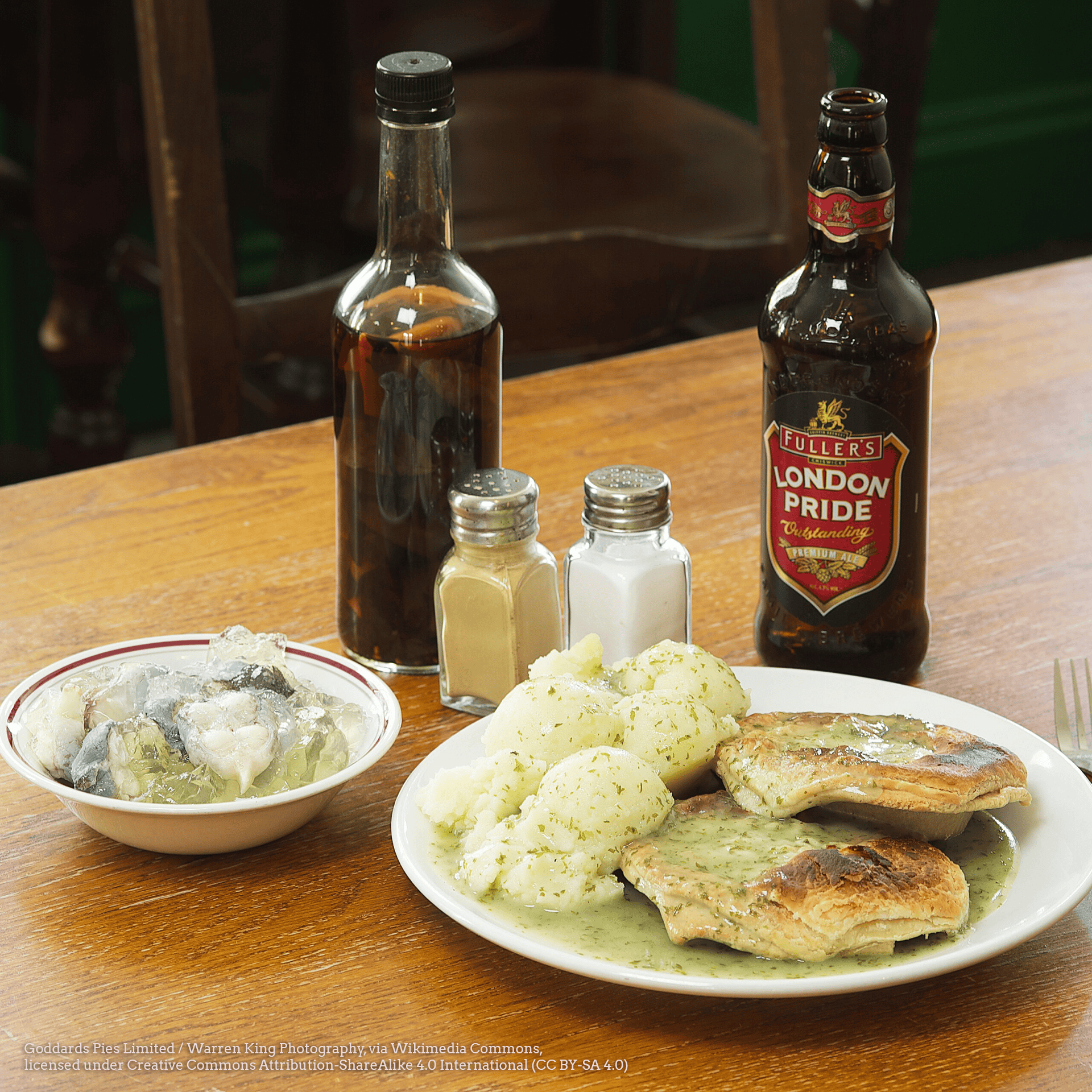
Goddard’s Pie, Mash and Liquor with Jellied Eels by Goddards Pies Limited / Warren King Photography, via Wikimedia Commons.
A Coffee Bar in a Victorian-Era Urinal
Nope, not a typo! These ornate underground urinals once served Victorian gentlemen in London. Now they serve diners espresso, flat whites, and avocado toast. Just pop down the stairs, take your seat at one of the full-size porcelain urinals, and sip your coffee at The Attendant, 27A Foley Street, London. Bottoms Up!
The Knights Templar Longevity Diet
Graybeards were a rare sight in the 13th century, when life expectancy – even for the wealthy – was a mere 31 years. If you made it into your twenties, that number jumped to 48 years. The Knights Templar were an extraordinary exception: many lived past 60 (mainly dying in combat, not from illness). Their secret was in their diet and habits. Two knights shared one eating vessel and alternated days of meat-eating (beef, ham, or bacon) and vegetarianism (bread, milk, eggs, cheese, grains, and stews). On Fridays, fish was substituted.
Artificial Asses’ Milk – Health Milk on a Budget
Since antiquity, donkey milk has been used as a cure-all and cosmetic. Cleopatra was said to bathe in tubs full of asses’ milk to keep her skin youthful. Ladies… are you paying attention! Hippocrates recommended donkey milk for a range of conditions, including fever and liver conditions. But because it was expensive, an 18th-century recipe for “Mock Asses’ Milk” begins with boiling barley in water, adding hartshorn (ground-up deer antlers), enrigo root and a handful of snail shells, then diluting the brew in cow’s milk. You might get a good hee-haw by serving it at a family brunch.
A Fabled Fish Head Pie
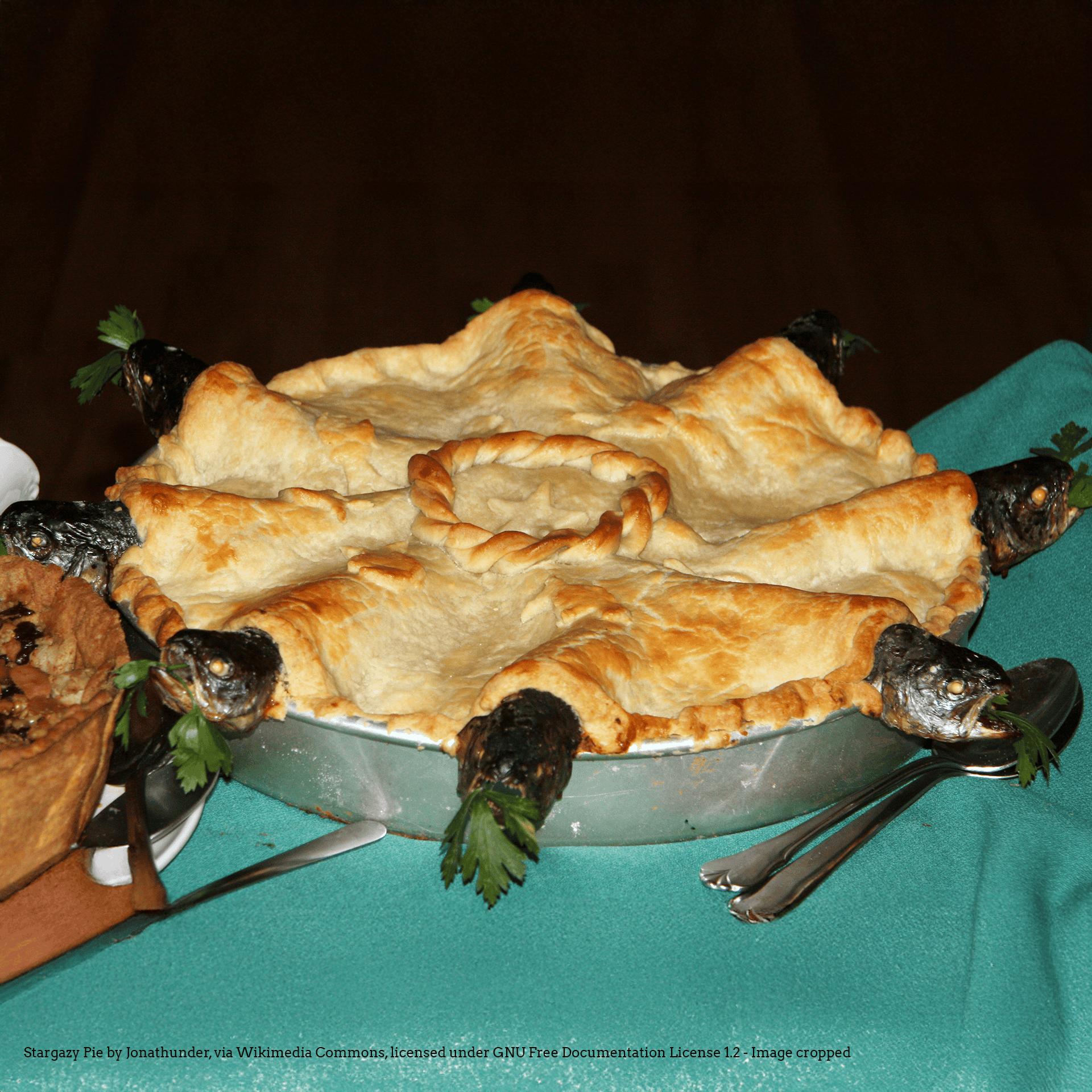
With Christmas fast approaching, you may want to try your hand at a Fish Head Pie, whose origins date back to the 16th century. First imagined in the Cornish seaside village of Mousehole, the town celebrates Tom Bawcock’s perilous fishing excursion into the dangerous waters of a turbulent storm. He brought back his bounty to end a local famine. Now called Tom Bawcock’s Eve, a Christmastime festival where they serve a hearty pie with fish heads sticking out of the crust. Ships Ahoy!
The Origins of Other Colorful Cultural Cuisines
Please note that this is but one of a series of odds and ends. If you enjoyed this episode, please tune in to the next delectable feature!
Explore more in our Food Spotlights or subscribe to our newsletter for weekly stories and recipes inspired by history. Taste the rest of the story.
Selected Sources and Further Reading
-
- English Heritage — A Timeline of food in Britain
- London Museum — Jellied eels might be the ultimate London delicacy
- Love Food— The most bizarre traditional British dishes of all time, ranked
- Cropped image – Stargazy Pie by Jonathunder, via Wikimedia Commons, licensed under GNU Free Documentation License 1.2
- Cropped image – Goddards Pies Limited / Warren King Photography, via Wikimedia Commons, licensed under Creative Commons Attribution-ShareAlike 4.0 International (CC BY-SA 4.0)
Note to my readers:
My research draws on travel experiences, books, and, sometimes, AI tools. I love using my own photos whenever possible, but occasionally I include stock or AI-generated images to help illustrate the story.
Still Intrigued By The Menu?
Subscribe to our newsletter for the freshest bites of food history, culture, and exclusive features.
Still hungry for history?
Let’s Connect
About Food Culture Bites
Food Culture Bites is a food history and culture website dedicated to exploring how food becomes identity. We tell the stories behind the dishes and traditions that shape past and present communities. Read more.>
Meet Janette Speyer

Behind every bite, there’s a story. Join me on a journey through history to explore how centuries of culture have shaped the way we eat. Read More >
Meet Bob Speyer

Bob Speyer is a writer and contributor to Food Culture Bites, bringing a lifetime of global experience, storytelling, and cultural insight to the publication. Having traveled to more than 60 countries, Bob writes with a deep appreciation for how history, food, and human connection intersect across cultures. Read More >