
One Thousand and One Nights of Hummus
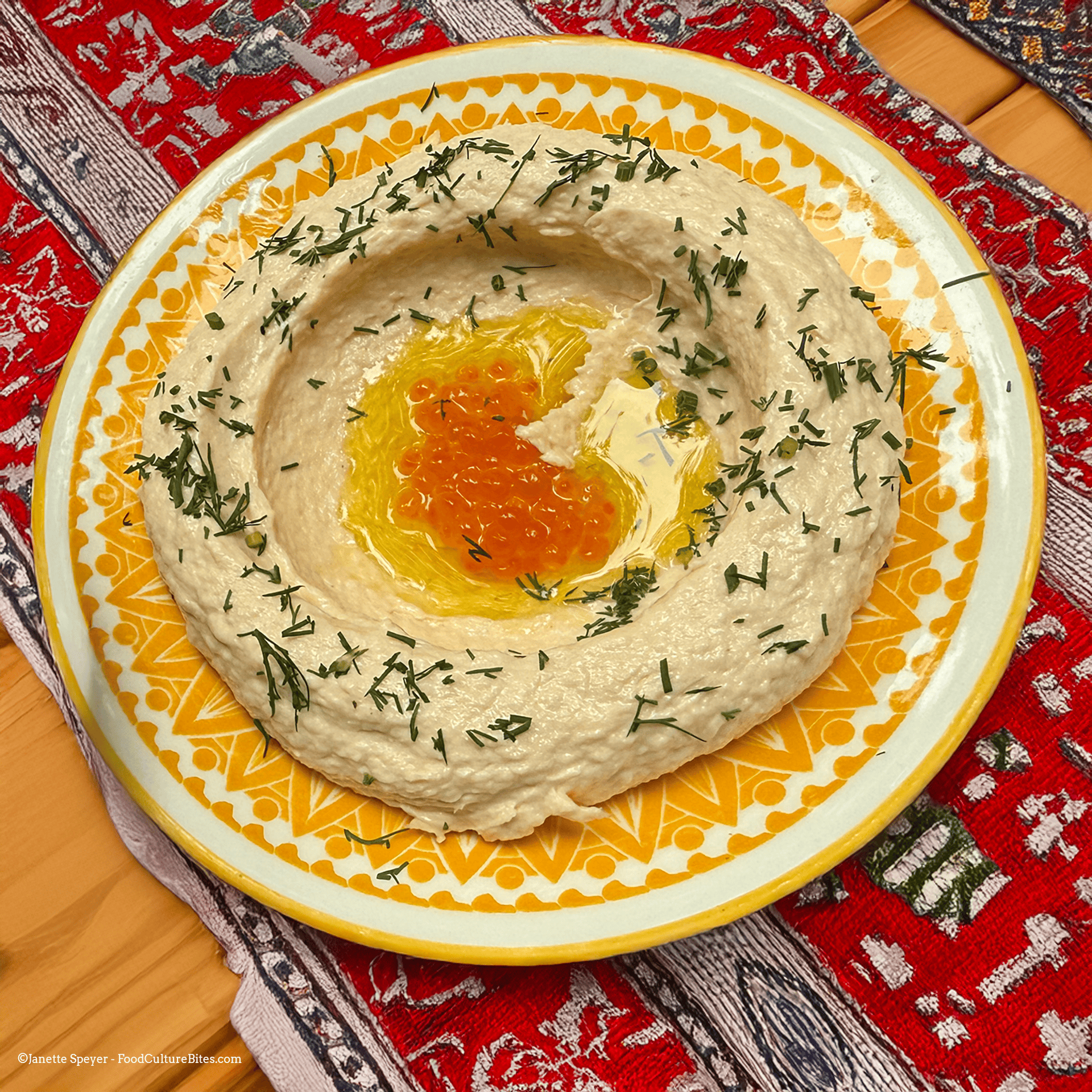
Ask someone to describe hummus, and you’ll hear the same answer: chickpeas, tahini, lemon, garlic, and olive oil.
Hummus is more than chickpeas, tahini, lemon, garlic, and olive oil. It is a culinary tradition, a family memory, and a conversation shared across the Middle East. Every family seems to have its own recipe, and every region its own interpretation.
Lebanon, Palestine, Syria, Egypt, Turkey, and Israel: Generations of cooks have cooked this simple combination for centuries, making it one of the Middle East’s most coveted dishes.
In each country, families have their own ways of preparing, seasoning, and serving this dish. Some add more tahini and whip it. Others like it thick, rustic, or served warm with yummy toppings. Some add more lemon, others more tahini or garlic. Toppings can turn a familiar bowl into an entirely different meal.
Hummus is more than a recipe. It reflects geography and family traditions. People have eaten it through generations.
My family brought it with them to Venezuela. From Syria or Egypt? I don’t know exactly, but I still ate it. I made mine today with more chickpeas than tahini.
*This post contains affiliate links. If you make a purchase through these links, I may earn a small commission at no additional cost to you. I earn from qualifying purchases. Thank you for supporting this site and helping me keep ancient food stories alive. Learn more.*
First, Exactly What Is Hummus?
The Arabic word hummus (حمص) means chickpeas. That’s it! What most of us call hummus is actually hummus bi tahini, or chickpeas with sesame paste.
The texture depends on how long you cook the chickpeas, whether you remove the skins, how much tahini you add, or how you blend it.
Some make it almost cloud-like. Others prefer a thicker preparation with a little texture. Here’s where the regional differences begin. Join me on a journey of hummus traditions
Lebanon: Silky, Creamy and Generous with Tahini
Lebanese hummus has a beautifully smooth texture and a strong sesame tahini flavor. Lemon adds brightness, garlic adds character, and a touch of olive oil gives it a rich finish.
It is usually served as part of a mezze spread, accompanied by warm pita, olives, pickles, and other small dishes. My go-to at a Lebanese restaurant.
Presentation matters as much as preparation. Fill a hollow in the dip with olive oil, then top with whole chickpeas and paprika.
Palestine: Warm with a Wonderful Texture
Palestinian food traditions offer a fascinating range of chickpea preparations.
One particularly interesting dish is msabaha, sometimes spelled musabbaha. Unlike the completely smooth hummus familiar in many Western kitchens, this preparation features warm, whole or partially crushed chickpeas mixed with tahini, lemon, and garlic.
The result is more rustic and substantive. People often eat it warm with fresh bread. I am lucky enough to enjoy Palestinian hummus at my local Farmers Market.
Another dish, hummus fatteh, combines chickpeas with pieces of toasted or fried pita, yogurt-based sauces, nuts, and other toppings.
The same ingredients and a whole other cultural experience. An entirely different eating experience.
Syria: Many Ways to Eat
One of the earliest surviving written recipes resembling hummus appears in a 13th-century Syrian cookbook, Kitāb al-Wuṣla ilā al-Ḥabīb fī Waṣf al-Ṭayyibāt wa-al-Ṭīb, published in English as Scents and Flavors: A Syrian Cookbook.
The manuscript is traditionally attributed to Ibn al-Adim, a prominent historian from Aleppo who lived from 1192 to 1262, although its authorship has not been conclusively established.
Syrian hummus is a little closer to what I know. My ancestry is from Damascus and Aleppo. This is where it gets a little complicated; the country’s food traditions are diverse. Damascus and Aleppo each have distinctive culinary identities. Hummus preparation and culture vary by region.
My family eats hummus with olive oil, paprika, and pine nuts. Roast those nuts, and it’s pure glory.
Syrian cooking is not one tradition. Family recipes can differ considerably from one household to another.
Jordan: Hummus Is Part of the Main Meal
In Jordan, people often enjoy hummus as part of a larger meal rather than simply as a dip. Also, it’s part of a healthy and delicious breakfast.
A traditional breakfast might include warm pita or kmaj (flatbread). Use the bread as a utensil to scoop the food. Crispy falafel, fresh tomatoes, cucumbers, mint, onions, and pickled turnips or olives. Now, this is massively important! Olive oil is everything; not just a garnish, it is essential for flavor and richness.
The combination of chickpeas and fava beans is especially interesting. These legumes have long been central to the region’s everyday cooking. They provide affordable, nourishing meals.
Egypt: The Wider World of Chickpeas and Fava Beans
Egypt has an important place in the culinary history of legumes and sesame seeds.
A great example comes from a 14th-century Egyptian cookbook, Kanz al-Fawa’id fi Tanwi’ al-Mawa’id (Treasure Trove of Benefits and Variety at the Table), which has eleven recipes for ḥimmaṣ kassā, a preparation of mashed chickpeas.
Food historian Nawal Nasrallah, who translated the cookbook into English, identifies these recipes as precursors to modern hummus. Some versions included tahini, walnuts, parsley, mint, olive oil, spices, and preserved lemon. Quite a departure from the simple chickpea dip we know today!
Fava beans are also important to Egyptian culture. Ful medames is a beloved breakfast dish that I will be eating very soon. I can’t wait. I will report back to you next year.
Although ful is not hummus, both dishes celebrate the region’s long tradition of cooking with legumes. They are different preparations, but both have an important place in everyday food culture.
The Egyptian chickpeas and hummus preparations vary by region and household preferences.
Southern Türkiye: Warm Hummus with a Different Finish
This hummus differs from what we’re used to. Unlike standard cold hummus, some regions in Türkiye use more tahini. Sometimes they double-roast the seasoning for a deeper, nuttier flavor, warming it on the stovetop or baking it in a small clay dish (güveç).
Here’s where it gets creative. Before serving, they top it with melted butter, sizzling red pepper flakes (pul biber), or ground red pepper (kırmızı toz biber) for a rich, aromatic, yummy spicy finish.
Other popular variations include adding slices of air-dried, cured beef coated in a spiced fenugreek paste, which is now a classic dish known as pastırmalı humus. In Hatay, local variations include topping the warm hummus with sautéed pine nuts or spiced minced meat.
Israel: A Combination of Many Cultures
Today, hummus is one of the most recognizable dishes in Israeli food culture. It’s breakfast, lunch, anytime, all day. A meal in itself, served with warm pita, pickles, onions, falafel, and a generous drizzle of olive oil.
But no single Israeli hummus recipe exists. I visited a souk in Jerusalem where the hummus stalls offered a fascinating culinary tour of the region. Different vendors represented different food traditions, with their own preparations and flavors. They offered Palestinian, Turkish, Egyptian, Jordanian, and Lebanese versions, alongside dishes associated with Bedouin and Druze food traditions. Each stall had its own character, and each bowl told a slightly different story.
Arab citizens of Israel, including Palestinian communities, have longstanding hummus traditions. Druze communities also share in the wider Levantine culinary heritage, with their own household and regional food customs.
Jewish Israelis also enjoy hummus as an everyday staple. Their food traditions combine many influences, brought by families who arrived from Syria, Egypt, Iraq, Yemen, and North Africa, alongside other culinary influences.
Places such as Abu Ghosh, Jaffa and Haifa are well known for their hummus restaurants and food traditions.
I don’t think Israeli hummus is one distinct recipe. It is part of a diverse contemporary food culture shaped by many communities with different histories and traditions.
What Actually Changes the Taste?
Same ingredients, but small differences dramatically change the flavor.
Tahini: More tahini produces a richer sesame flavor. Less allows the chickpeas to take center stage.
Lemon: A generous squeeze gives hummus a brighter, sharper character. My personal addition.
Garlic: Raw garlic can be quite assertive. The amount you use makes a big difference.
Texture: Some want a smooth purée; others prefer a rustic chickpea consistency.
Spices and Toppings: Cumin, sumac, paprika, pine nuts, parsley, olive oil, or all the above can transform the final dish.
Even how you serve hummus matters. Warm or cold, as a dip or a meal, with bread or vegetables, each presentation offers something different.
There is no universal formula. Often, the most memorable version is the one someone grew up eating.
So Who Invented Hummus Anyway? Not a Simple Answer
Hummus has become the subject of considerable debate over cultural identity and ownership. But its history is more complicated than this.
The earliest surviving written recipes resembling hummus appear in medieval Arabic cookbooks. These older recipes were not necessarily identical to the hummus served in restaurants today.
Historical evidence shows that chickpea and sesame recipes were already part of Syria, Egypt, and the Levant centuries ago.
Maybe that is why we can’t assign hummus to one place. Its story belongs to a much wider culinary landscape.
My Family History
My own family connection to hummus comes from Syria and Egypt. Hummus was part of what I grew up eating. It remained part of our family table even after my relatives were forced to leave Syria.
By the time hummus moved from the UK to Venezuela, it changed.
By the time I got into the kitchen, I was already experimenting with this dish. My grandma had all the culinary answers and invited my sister and me to learn how to cook these recipes. At five years old, I did not realize this traditional cuisine was my inheritance.
Like many family recipes, it was not written down or measured precisely. I learned it by watching, tasting, and making it again.
The Dish With Many Traditions
Whether it is Lebanese hummus, Palestinian msabaha, a Syrian family recipe, Egyptian chickpea and ful dishes, or Turkish variations. The many versions tell a story about the region and its people.
It reminds us that food travels, traditions overlap, and recipes evolve.
Sometimes, the most interesting version of a dish is not the one found in a particular region or restaurant. It is the one passed down around a family table.
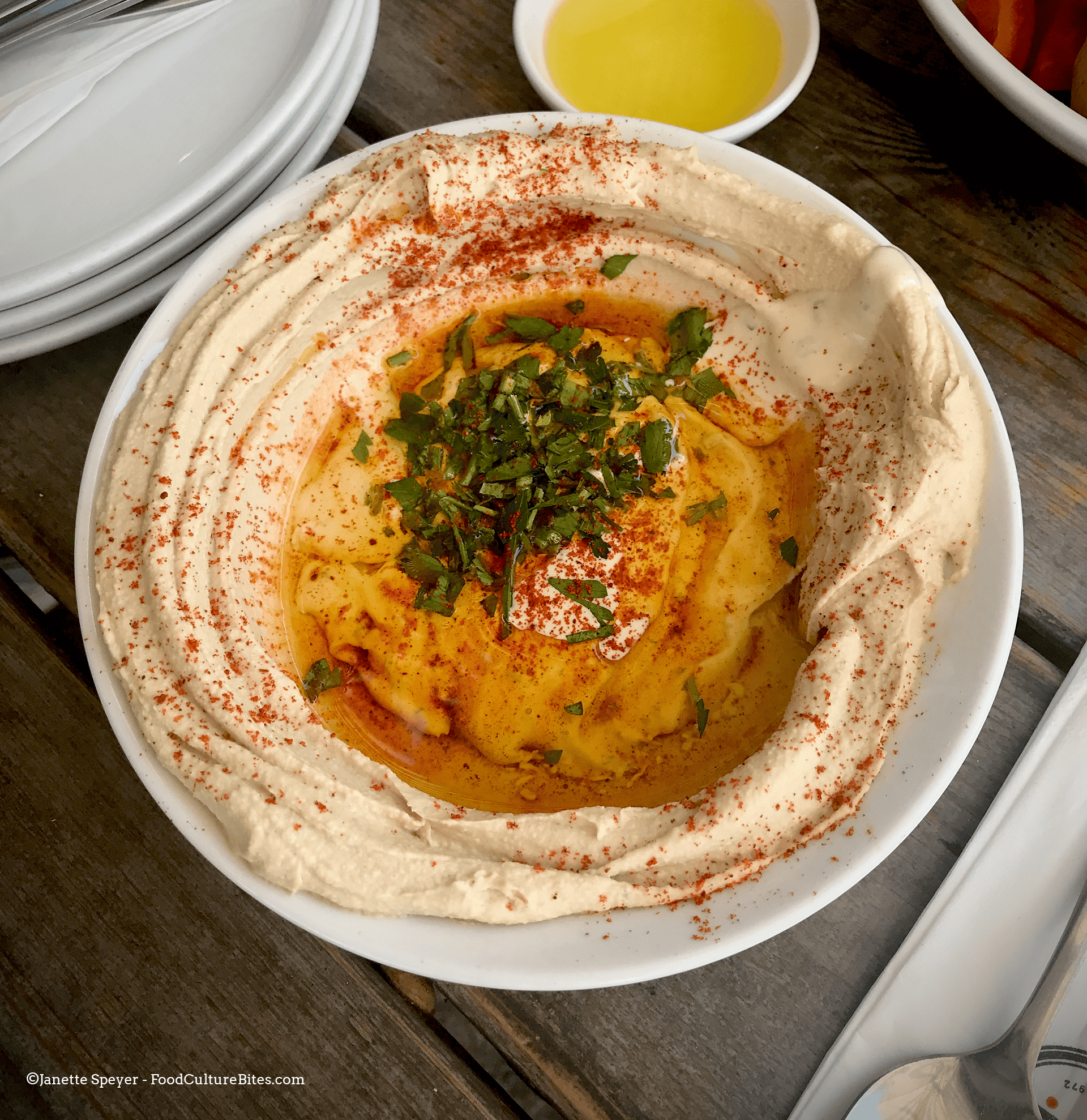
Here’s a little piece of family history that has survived across generations:
Note: I don’t measure everything precisely. I taste as I go, adjusting the lemon, tahini, and seasoning until it tastes like home.
Ingredients:
- 1 cup dried chickpeas, soaked overnight
- ¼ cup tahini (add more if desired)
- Juice of 1 lemon, or to taste
- 1 small clove garlic
- 2–3 tablespoons reserved chickpea cooking liquid, as needed
- Salt and pepper to taste
- Good olive oil
- Paprika, cumin, roasted pine nuts and sumac for garnish
- Preparation:
- Soak the dried chickpeas overnight.
- Drain and rinse them, then cook in a slow cooker with fresh water, a bay leaf, and a little salt until very tender. They should be soft enough to crush easily between your fingers.
- Reserve some of the cooking liquid before draining.
- Transfer the chickpeas to a food processor and blend until smooth.
- Add the tahini, lemon juice, and garlic. Blend again.
- Add the reserved chickpea liquid, one tablespoon at a time, until you reach your desired consistency.
- Season with salt and pepper. Taste and adjust the tahini, lemon, and garlic as you go.
- Transfer to a serving dish, make a well in the middle, and drizzle with good olive oil.
- Finish with paprika, cumin, roasted pine nuts, and a little sumac.
Helpful Tips:
Don’t skimp on cooking the chickpeas. Very tender chickpeas make a wonderful hummus.
Add the lemon gradually. You can always add more.
Don’t put all the garnishes into the food processor. The roasted pine nuts, paprika, and olive oil belong on top.
Explore more in our Food Spotlights or subscribe to our newsletter for weekly stories and recipes inspired by history. Taste the rest of the story.
Selected Sources and Further Reading
- ArabLit— From the Archives: A Cookbook from Cairo’s Flourishing 14th Century
- Serioous Eats — The Chickpea Dishes Every Hummus Lover Should Know
- UNESCO — A thousand and one ingredients: medieval Arab cuisine’s rich heritage
Note to my readers:
My research draws on travel experiences, books, and, sometimes, AI tools. I love using my own photos whenever possible, but occasionally I include stock or AI-generated images to help illustrate the story.
Still Intrigued By The Menu?
Subscribe to our newsletter for the freshest bites of food history, culture, and exclusive features.
Still hungry for history?
Let’s Connect
About Food Culture Bites
Food Culture Bites is a food history and culture website dedicated to exploring how food becomes identity. We tell the stories behind the dishes and traditions that shape past and present communities. Read more.>
Meet Janette Speyer

Behind every bite, there’s a story. Join me on a journey through history to explore how centuries of culture have shaped the way we eat. Read More >
Meet Bob Speyer

Bob Speyer is a writer and contributor to Food Culture Bites, bringing a lifetime of global experience, storytelling, and cultural insight to the publication. Having traveled to more than 60 countries, Bob writes with a deep appreciation for how history, food, and human connection intersect across cultures. Read More >