
The Covered Wagon Diet: They Ate What??
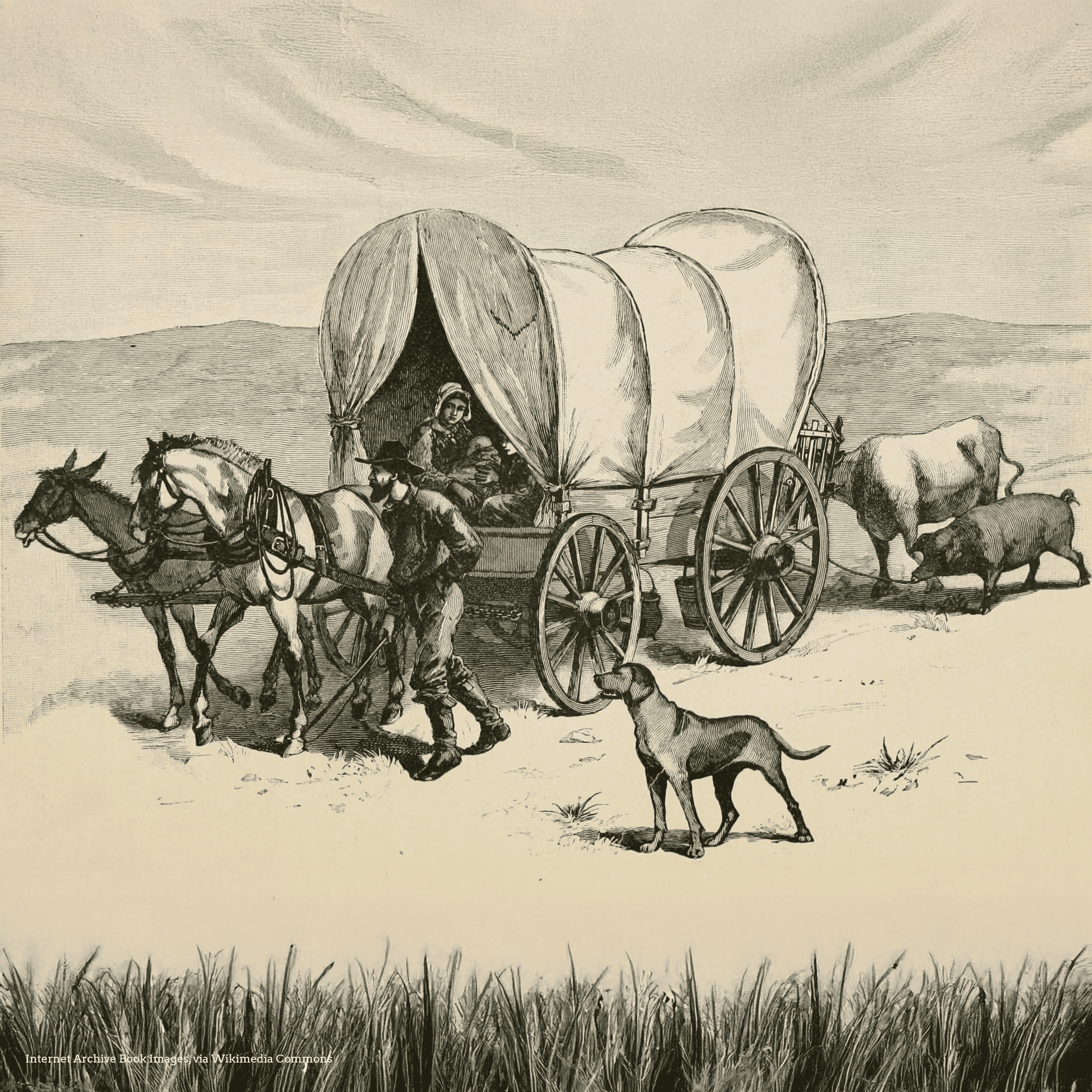
We’re going on a journey with a family traveling for several months in a covered wagon. What a romantic way to discover this beautiful country. Or was it? Western movies give us a snippet of how these families crossed the country in a covered wagon. I was chatting with a friend about covered wagons, and I got to thinking. What did they pack? What did they eat?
The whole idea of packing for such a long, perilous journey is overwhelming. During the 19th century, thousands of families headed west, traversing America.
Food was pure survival and nothing else. Every ounce mattered, and whatever went into the wagon had to last for months.
*This post contains affiliate links. If you make a purchase through these links, I may earn a small commission at no additional cost to you. I earn from qualifying purchases. Thank you for supporting this site and helping me keep ancient food stories alive. Learn more.*
What Was Packed
What did a typical family pack for a journey like this one? Families had to calculate exactly what they needed to make sure they wouldn’t run out halfway across the country. Every portion was carefully rationed, and every item earned its place in the wagon. Cooking equipment, storage containers, pots, pans, and utensils were essential.
Packed staples included flour, cornmeal, bacon, beans, rice, dried fruit, coffee, sugar and salt. Some families also brought preserved meats and hard biscuits. Most of these vittles had to withstand months on the trail without spoiling.
Space and weight were limited. Packing too much could slow the journey, while packing too little could put the entire family at risk.
I Know This Already, What Else Did They Eat?
Options on the road were scarce, but pioneers had to make the most of whatever was available. Here’s a look at some of the foods that might have ended up in their cooking pots.
Hardtack: Extremely hard, dry biscuits made from flour, water, and salt. They could last for months if kept dry and were sometimes soaked in liquid or crumbled into soups before eating.
Salt pork: Heavily salted pork that provided an important source of fat and protein. It was a staple of many emigrant provisions.
Wild game: Whatever they could hunt, depending on the region and season. Deer, rabbits, birds, and other game could provide a welcome change from salted provisions.
Prairie turnips: An Indigenous food with a long history on the Great Plains. These edible roots, also known as tipsin, were harvested, dried, and used in traditional Indigenous cooking.
Animal hides: In the Donner Party tragedy, some survivors boiled animal hides to extract whatever nourishment they could. It was a desperate measure when food supplies had run out.
This diet could sustain families for long periods, although it wasn’t necessarily balanced or particularly appetizing. They ate what they had, not necessarily what they wanted. When survival was the priority, a full cooking pot was a blessing.
How Did They Preserve the Goods?
This was a long journey, so preserving food was essential. Families had to find ways to keep their provisions edible for weeks or even months with no refrigeration.
Drying: One of the simplest methods was drying. Removing moisture helped prevent bacteria and mold from growing. They cut meat into thin strips, dried it in the sun or over a fire, and turned it into jerky. They also dried sliced apples, pumpkins, and pears, either outdoors or near a fireplace.
Salting: Salting played a major role in food preservation. Salt drew moisture out of meat through osmosis, helping prevent spoilage. People packed beef and pork in heavy salt or submerged them in brine, often in wooden barrels or crocks.
Smoking: Some families used makeshift smokehouses, hanging meats and fish over slow-burning hardwood fires. The smoke inhibited microbial growth while adding that distinctive smoky flavor.
Fermenting: Families preserved vegetables and other foods in acidic liquids such as vinegar, often with salt and spices. The acidity helped prevent many spoilage organisms from growing. By shredding cabbage and fermenting it with salt, families could make a food that lasted for months when stored properly. It was also an important source of vitamin C, helping protect against scurvy.
Storage: Root vegetables could be packed and layered in straw or sand to keep them fresh longer.
Sugar: People could preserve fruit with sugar. Families made jams, jellies, and preserves by cooking fruit with sugar. These were easy to take on the road.
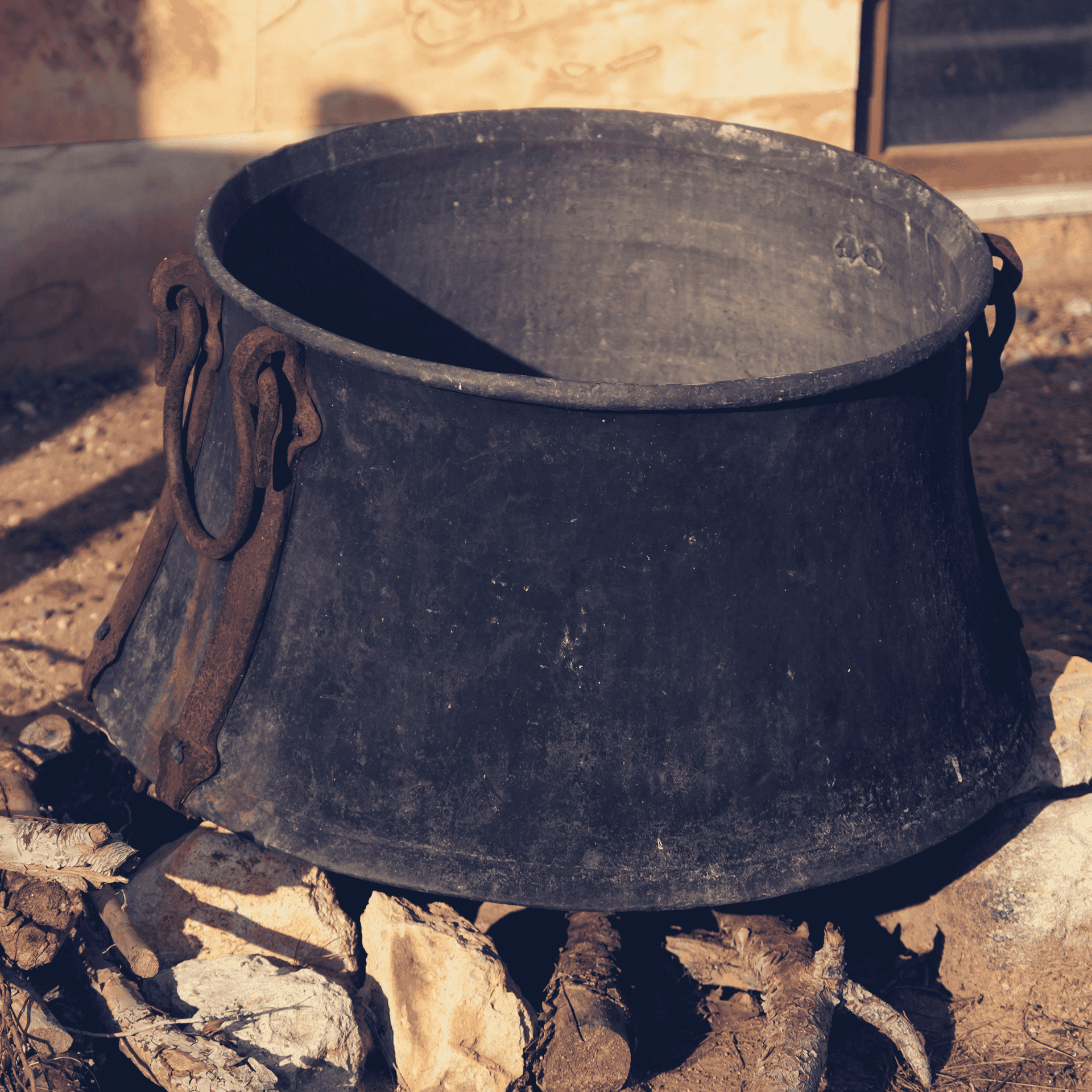
The pioneers’ outdoor kitchen. A large iron kettle like this was essential to the covered wagon diet, used to prepare hearty meals over an open fire, often feeding an entire wagon party.
How Did They Cook?
The fun part was the cooking. Anyone who has been camping knows that this is an adventure in itself. The open fire was their friend. Families gathered dry wood and kindling whenever they could find it and cooked their meals over the open fire. The Dutch oven was an essential. They used it to prepare everything from stews and beans to biscuits and bread. Finding clean water for cooking and drinking was a challenge, as was finding fuel.
I used to camp in the rainforest in my younger days, and finding dry wood or cooking in the rain was quite an adventure. I can’t even imagine doing this for a month. The pioneers prepared their meals in the wind, rain, and dust after a long day of traveling. They also walked and cared for children and livestock. They ate biscuits and bacon for breakfast or cornmeal porridge; supper often consisted of beans or stews.
Recipe: Pioneer Beans with Cornmeal Dumplings.
What did an ordinary pioneer supper taste like? Here’s a simple dish inspired by the ingredients families carried west. Nothing fancy; it’s just beans, cornmeal, and a little creativity. After a long day on the trail, a warm meal like this would have been welcome.
Ingredients:
For the Pioneer Beans
- 1 lb dried brown beans
- 6–8 cups water, plus extra as needed
- 1 medium onion, chopped
- Salt and black pepper to taste
- 1 bay leaf (optional)
For the Cornmeal Dumplings
- ½ cup cornmeal
- ½ cup all-purpose flour
- ¼ tsp salt
- 2 tbsp beef tallow or rendered suet
- ⅓–½ cup water, added gradually
- ½ cup milk
Preparation:
- Cook the Beans: Soak the beans overnight in water. Drain and rinse. Place them in a heavy pot or Dutch oven with fresh water and the chopped onion. Bring to a boil, then reduce to a gentle simmer. Cook for approximately 2–3 hours, or until tender, adding water as needed. Season with salt and pepper.
- Prepare the Dumplings: In a medium bowl, combine the cornmeal, flour, and salt. Cut in the beef tallow or suet until the mixture resembles coarse crumbs. Stir in the buttermilk or milk just until a thick, soft batter forms that holds together.
- Drop and Cook: Shape the dough into small dumplings and place them gently on top of the simmering beans. Cover the pot tightly and cook over low heat for approximately 20–25 minutes, until the dumplings are firm and cooked through.
- Serve: Ladle the beans into bowls with the cornmeal dumplings on top. A simple, hearty meal made from basic pantry ingredients.
A few historical notes: Sometimes pioneers bought cows with them on the journey, so milk was available.
The Indigenous Knowledge that Helped Shape the Journey
Pioneers rarely traveled completely alone. Wagon trains were communities on wheels. Families formed, helped one another, and built strong ties out of necessity. They repaired wagons, cared for children, prepared meals, and shared supplies. Someone was ill, livestock? Other travelers offered a helping hand. Relationships like these made the difference between getting through difficulties and facing them alone.
But another community already lived on this land. Indigenous peoples lived in the Great Plains for thousands of years and developed sophisticated food systems, trading networks, and an extraordinary understanding of plants, wildlife, and water sources.
Their contributions to food and survival were significant. Indigenous communities hunted bison, harvested and cultivated crops. Prairie turnips, known as tipsin in Lakota, were another important traditional food. Some communities dried meat and fruit, preserved foods for later use, and traded provisions with neighboring nations.
Emigrants sometimes traded with Indigenous people, benefiting from their knowledge of local routes and the landscape. Encounters such as these happened during a period of expanding westward settlement. Indigenous communities were increasingly displaced and restricted. This disrupted their traditional hunting grounds and their food systems.
Pioneers were learning to survive in a landscape Indigenous peoples had understood and lived with for generations. This knowledge of the land, food, and natural resources was already deeply established long before the covered wagons.
When Surviving Takes Over
Even with the best planning, nothing was guaranteed. Wagons could overturn during river crossings, soaking provisions and making them useless. Livestock could wander off, become ill, or die. Drought, floods, bad weather, and unexpected delays would strand travelers far from settlements.
When supplies dwindled, the rations began. Hunting, fishing, and foraging for berries and roots were other ways to survive. At least something ended up in their cooking pots, even if it was nothing like what they ate at home.
Sometimes, this wasn’t enough. Hunger, dehydration, and illness could weaken an entire clan of pioneers.
Perhaps the most infamous example was the Donner-Reed Party. These emigrants were already facing an incredibly difficult journey out west in 1846. Heavy winter snow trapped them in the Sierra Nevada. They took the ill-fated Hastings Cutoff. Food supplies ran out, and desperate survivors first resorted to boiling animal hides for sustenance.
If this was not already awful, some eventually turned to cannibalism. These documented events remain among the darkest chapters in American westward migration. The story was sensationalized, and it’s important to distinguish history from fiction.
What We Learned About the Covered Wagon Diet
The covered wagon diet is more than a window into what people ate. It reveals the importance of food preservation, planning, and resourcefulness. Survival depended on community and knowledge of the land. The families learned through trial and error, often under incredibly difficult circumstances.
Today, we take so much for granted. Everything is easy: a refrigerator, a nearby grocery store, and the ability to cook without worrying about getting the ingredients. After following these families across the prairie, I sure appreciate my kitchen!
Explore more in our Food Spotlights or subscribe to our newsletter for weekly stories and recipes inspired by history. Taste the rest of the story.
Selected Sources and Further Reading
- National Park Service — Traveling the Emigrant Trails
- Nebraska State Historical Society — Food Along the Overland Trail
- Bureau of Land Management – Oregon Trail Education Resources Guide (PDF) — An Education Resource Guide
Note to my readers:
My research draws on travel experiences, books, and, sometimes, AI tools. I love using my own photos whenever possible, but occasionally I include stock or AI-generated images to help illustrate the story.
Still Intrigued By The Menu?
Subscribe to our newsletter for the freshest bites of food history, culture, and exclusive features.
Still hungry for history?

Let’s Connect
About Food Culture Bites
Food Culture Bites is a food history and culture website dedicated to exploring how food becomes identity. We tell the stories behind the dishes and traditions that shape past and present communities. Read more.>
Meet Janette Speyer

Behind every bite, there’s a story. Join me on a journey through history to explore how centuries of culture have shaped the way we eat. Read More >
Meet Bob Speyer

Bob Speyer is a writer and contributor to Food Culture Bites, bringing a lifetime of global experience, storytelling, and cultural insight to the publication. Having traveled to more than 60 countries, Bob writes with a deep appreciation for how history, food, and human connection intersect across cultures. Read More >