
That Fortune Cookie… Well, It Isn’t Chinese!
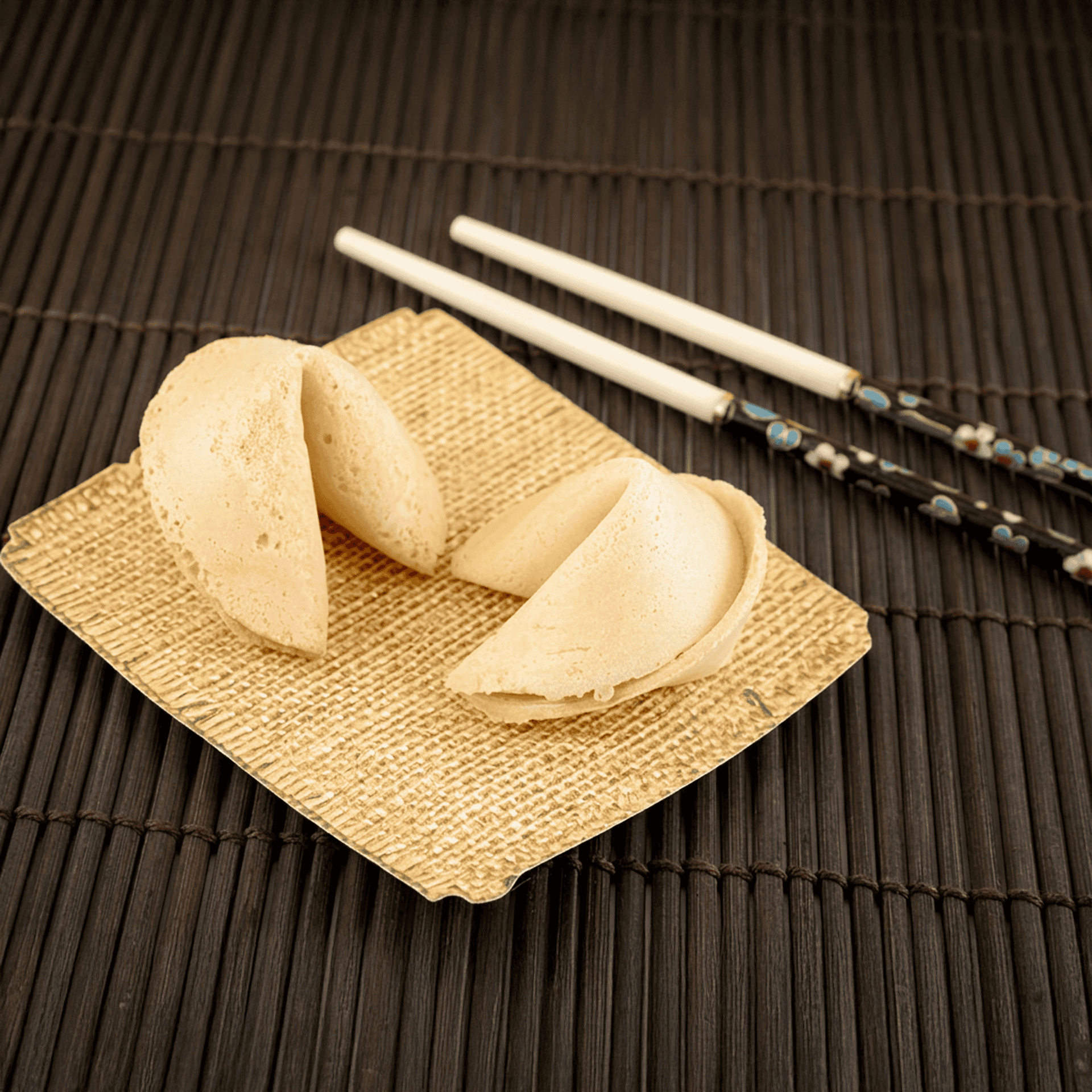
Every time I go to a Chinese restaurant, I look forward to one thing: the fortune cookie at the end of the meal. The best bit is that it can also foresee my future! It’s the fun part.
There is something wonderful about that fortune cookie. Millions of us open one after a Chinese meal; we look for a mysterious prediction, and we believe we’re enjoying a little piece of Chinese tradition.
But here’s a little surprise inside that little cookie. It isn’t Chinese at all. Not even a part of it!
How so?
This cookie story begins in Japan. It traveled across the Pacific, took root in California, and eventually found its way into Chinese restaurants. Along the way, it encounters cultural adaptation and a bitter chapter of American history. Our cookie also has a little controversy over who deserves credit for inventing it.
Quite a history for a cookie that usually comes free with dinner.
*This post contains affiliate links. If you make a purchase through these links, I may earn a small commission at no additional cost to you. I earn from qualifying purchases. Thank you for supporting this site and helping me keep ancient food stories alive. Learn more.*
A little Japanese History
Before we ate fortune cookies in American Chinese restaurants, Japan first made a similar treat.
In Kyoto, Japanese sweet makers baked a traditional cracker known as tsujiura senbei, sometimes translated as fortune crackers. These were larger, darker, and less sugary than the pale, sweet cookies we know today.
Made with sesame and miso, they had a distinctive toasted flavor. And they had a little unexpected something inside: a small slip of paper printed with a fortune.
The tradition dates back at least to the 19th century. A fascinating piece of evidence is an 1878 Japanese woodblock print depicting a man preparing these crackers using a hand-operated iron grill.
Unlike the American fortune cookies, the Japanese version tucked the paper into the folded edge rather than hiding it inside the cookie.
In parts of Japan, these crackers are tied in with fortune-telling traditions and shrines. They were a little edible reminder that everyone enjoys a glimpse of what the future might hold.
How did a Japanese cracker become the dessert lore at Chinese restaurants miles away?
Let’s go to California to find out.
A Japanese Garden and a New Cookie
At the turn of the 20th century, Japanese immigrants established businesses and communities along the American West Coast.
Enter Makoto Hagiwara, a Japanese immigrant and the creator of San Francisco’s Japanese Tea Garden in Golden Gate Park.
The garden premiered as an exhibit at the 1894 California Midwinter International Exposition. Hagiwara helped develop and maintain it, eventually turning it into a beloved destination. Here, the American fortune cookie began to take shape.
Hagiwara is credited with introducing fortune cookies to visitors, serving them with cups of green tea. I visited this garden many years ago and probably ate one with my tea, unaware of its history. What started as a Japanese cracker was adapted for American tastes.
As the cookie grew in America, the flavor became sweeter and more delicate. Vanilla and butter replaced the stronger sesame and miso notes of its Japanese predecessor.
However, making them by hand was time-consuming. Demand eventually grew beyond what the garden could produce.
Hagiwara turned to a Japanese confectionery business in San Francisco called Benkyodo, founded in 1906 by Suyeichi Okamura.
The bakery supplied the cookies and developed more efficient ways to produce them. Its family history, including the original iron molds used to shape the cookies, would later become part of the Smithsonian’s collection.
The fortune cookie was finding its American identity, as we all do.
The Chinese Restaurant Connection
There’s more to this story.
Japanese immigrants brought their traditional foods to America as they adapted to a new country, new customers, and strange tastes.
During the early 20th century, some Japanese entrepreneurs operated Chinese restaurants, serving popular Americanized dishes such as chop suey and chow mein.
The fortune cookie fitted nicely into this dining experience. A sweet little ending to a meal, and the novelty of finding a message inside made it memorable.
Japanese bakeries supplied cookies to restaurants. The treat gradually became tied with Chinese-American dining.
More than one immigrant family claimed its creation.
In Los Angeles, the Japanese-American Kito family, founders of the confectionery Fugetsu-Do, claimed it. David Jung of the Hong Kong Noodle Company was credited with introducing his version in Los Angeles around 1918.
The exact American inventor remains in dispute. San Francisco and Los Angeles both have their own stories. Other immigrant families also played a role in the cookie’s early development.
What we do know is that the Japanese cracker had crossed the Pacific and became distinctly American.
World War II and the Cookie’s New Fortune
Then came one of the darkest chapters in this story.
Dark times arrived in America. After Japan attacked Pearl Harbor in December 1941, suspicion and fear spread across the United States. In 1942, Executive Order 9066 paved the way for the forced removal and incarceration of Japanese Americans.
Families lost homes, businesses, and livelihoods. Japanese-American communities were uprooted. Bakeries that had been producing fortune cookies for years were forced to close or suspend operations.
The Japanese confectioners who had helped establish the American fortune cookie suffered as well.
As these businesses disappeared from the market, Chinese-American entrepreneurs increasingly took over production. Chinese restaurants continued serving the cookies, and manufacturers expanded their distribution.
The fortune cookie became firmly associated with Chinese-American cuisine.
It is an extraordinary example of how history can change a food’s identity. A Japanese tradition, adapted in California, became a familiar symbol of Chinese-American dining. All due in part to the forced displacement of another immigrant community.
An important distinction matters here: Chinese-American businesses helped popularize and develop the cookie’s place in restaurant culture. Their contribution is a big part of the story, too.
But please don’t forget the Japanese-American roots.
From Chinatown to the World
Today, the fortune cookie is one of the most recognizable symbols of the American Chinese restaurant.
It has traveled far from its California origins. Millions are produced for restaurants, takeout orders, celebrations, and special events. The messages have evolved, as well.
Some offer funky predictions about love, money, and success. Others deliver philosophical advice, inspirational quotations, or a little silliness to make you smile.
The fortunes have even become customizable. Businesses use them for promotions, weddings, parties and special occasions.
San Francisco’s Chinatown still celebrates the cookie’s history. Frank Leong established the Golden Gate Fortune Cookie Company in 1962 and is famous for keeping the tradition of hand-folding cookies. Visitors can watch as warm wafers are shaped and even request personalized fortunes.
The cookie takes a lovely full-circle turn: the Japanese Tea Garden in Golden Gate Park, where Hagiwara popularized the fortune wafer, now gets its cookies from Mee Mee Bakery in San Francisco’s Chinatown.
The cookie has come a long way from Kyoto’s Japanese crackers.
Three Cultures, One Fortune Cookie?
This cookie has three cultural roots. No American inventor is universally accepted.
The Japanese roots are well documented, and the 1878 illustration provides a fascinating glimpse of the earlier tradition. But the modern American version developed through several Japanese and Chinese immigrants, especially in California.
That’s what makes its history so interesting.
The fortune cookie isn’t just Japanese or Chinese. It’s also American. It reflects immigration, adaptation, entrepreneurship, and the complexities of communities living side by side.
The next time you crack open that little golden cookie, take a moment before reading your fortune. You are holding a little piece of Kyoto, San Francisco, and Los Angeles all in one.
I think it is a pretty good fortune.
Explore more in our Food Spotlights or subscribe to our newsletter for weekly stories and recipes inspired by history. Taste the rest of the story.
Selected Sources and Further Reading
- Library of Congress — How do fortunes get inside of fortune cookies?
- Food Republic — Ever Wonder Who Invented Fortune Cookies?
- KQED — The Complicated Origins of SF’s Beloved Japanese Tea Garden
- History.com — The Surprising Origins of the Fortune Cookie
Note to my readers:
My research draws on travel experiences, books, and, sometimes, AI tools. I love using my own photos whenever possible, but occasionally I include stock or AI-generated images to help illustrate the story.
Still Intrigued By The Menu?
Subscribe to our newsletter for the freshest bites of food history, culture, and exclusive features.
Still hungry for history?

Let’s Connect
About Food Culture Bites
Food Culture Bites is a food history and culture website dedicated to exploring how food becomes identity. We tell the stories behind the dishes and traditions that shape past and present communities. Read more.>
Meet Janette Speyer

Behind every bite, there’s a story. Join me on a journey through history to explore how centuries of culture have shaped the way we eat. Read More >
Meet Bob Speyer

Bob Speyer is a writer and contributor to Food Culture Bites, bringing a lifetime of global experience, storytelling, and cultural insight to the publication. Having traveled to more than 60 countries, Bob writes with a deep appreciation for how history, food, and human connection intersect across cultures. Read More >