
What Is Ceviche? Where Did It Originate?
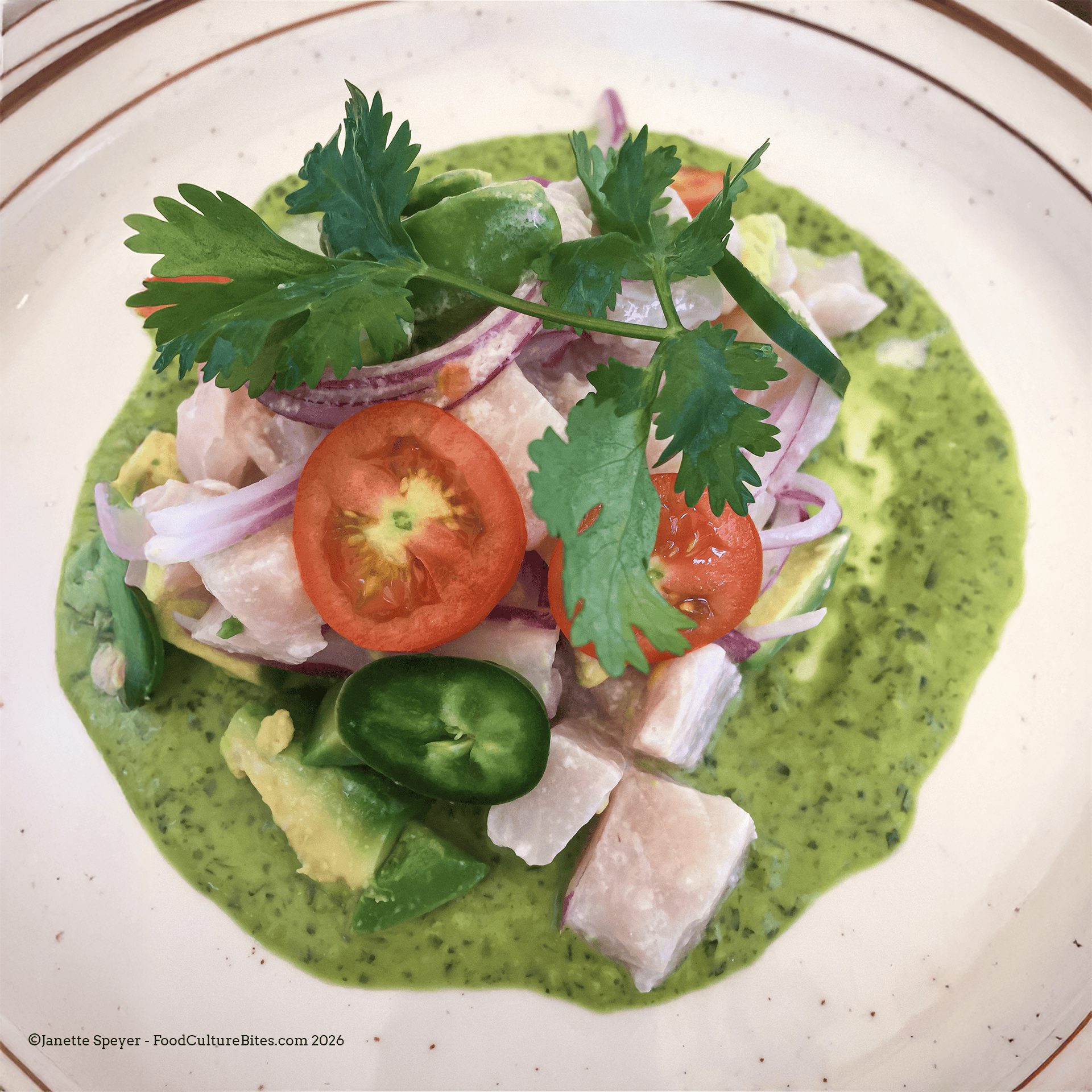
When we moved to Venezuela from the UK, a whole new world opened up for us. This adventure included strange and different foods. Ceviche was among them. My mother learned how to make it in no time. Just like that, we were enjoying this exotic dish.
Raw fish, cured in citrus, eaten fresh from the sea. That’s the whole idea behind ceviche. Limes weren’t even in Peru when the Moche (or Mochica) fishermen were turning the day’s catch into something close to what we eat today. I was curious to trace this dish back to its roots. Here’s what I found. So let’s go fishing.
Ancient Origins
Centuries later, the Inca adopted fish preparations along the Peruvian coast and made them their own, sometimes marinating fish in chicha de jora, a fermented corn drink. Some historians have linked the Quechua word siwichi, meaning ‘fresh’ or ‘tender fish,’ to the later name ceviche. The word’s true origin still remains debated. Related forms of siwichi are still used in parts of Peru today.
In the 1500s, the Spaniards introduced limes and onions. For centuries, ceviche remained a dish made mostly by fishermen’s wives and sold at small stalls in coastal villages. Ceviche became an elegant dish in the Twentieth century, when Peru’s culinary chefs like Gastón Acurio pushed it onto the world stage.
In 2004, Peru declared ceviche part of the nation’s cultural heritage. UNESCO followed in 2023, naming it an Intangible Cultural Heritage of Humanity. There’s even a holiday for it. Every June 28th is Día del Ceviche.
*This post contains affiliate links. If you make a purchase through these links, I may earn a small commission at no additional cost to you. I earn from qualifying purchases. Thank you for supporting this site and helping me keep ancient food stories alive. Learn more.*
Mexican Versus Peruvian Ceviche
Order ceviche in Lima and you’ll get something spare and precise. Cubes of white fish, usually sea bass or sole, are barely touched by lime juice, sometimes for as little as a minute. Red onion, sliced thin. Ají limo chili for heat. Some versions include a piece of sweet potato or a handful of toasted corn, maíz chulpe (toasted corn) on the side. The citrus marinade itself is called leche de tigre. The sauce is considered a dish in its own right and is often served in a small glass on the side. This is the type of Ceviche I ate in Caracas. Our Peruvian emigrant friends introduced my family to raw seafood.
Ceviche in Mexico, on the other hand, is a different animal. The fish or shrimp marinates far longer, often forty minutes or more, until it’s fully opaque and firm. Chopped tomato, cilantro, jalapeño, and sometimes avocado are added. So the whole thing looks and tastes more like a seafood salsa. It’s typically served with a stack of tostadas or tortilla chips. I think it’s closer to a seafood cocktail than a plated presentation.
Both are different; both are good. Peru treats ceviche as a showcase for pristine fish. Mexico treats it as a vehicle for bright, layered flavor. Both developed from coastal fishing cultures with citrus and chili on hand.
The Ceviche World Influence
Ceviche moved up and down the Peruvian coastline long before it moved overseas. Ecuador had its own version with tomato and orange juice. Chile and Colombia added their own regional touches. Guatemala’s ceviche had tomato juice and ketchup, a splash of Worcestershire, served with saltine crackers.
Japanese immigration to Peru reshaped the dish over decades after 1899. Japanese-Peruvian, or Nikkei, cooking introduced sharper knife work and shorter marinating times. That influence lives on in the ceviche served in Lima today.
That Japanese connection helped ceviche cross into the rest of the world. Chef Nobu Matsuhisa, who trained in Peru in his twenties, opened a Los Angeles restaurant in 1987. Serving ceviche and tiradito (Peruvian ceviche) alongside his Japanese menu, introduced both delicacies to American diners. Ceviche didn’t reach the UK until well after that. It made its way into London menus less than a decade before National Geographic wrote about its ancient roots in 2023.
Today, ceviche belongs to a global pattern of coastal cultures independently eating fish without fire. Korea has hoe. Scandinavia has gravlax. The Philippines has kinilaw, a raw-fish dish cured in vinegar and calamansi. Archaeological evidence traces this dish back to around 1200 AD, developed on its own shores and not borrowed from Peru. The need to cure fish with acid wasn’t invented once and exported everywhere. People who lived near water invented it over and over.
The Long Road to Raw Fish Adoption
Understandably, for most of the twentieth century, raw fish had an image problem in the West. American food writers in the 1950s and 60s described it as strange. But apparently edible? The kind of thing “civilized” people elsewhere happened to eat. Sushi bars stayed confined to Japanese neighborhoods in cities like Los Angeles and New York well into the 1970s. The idea of eating anything uncooked struck most Americans as weird and bizarre.
Initially, ceviche was more acceptable than sushi. Food critics and journalists described the dish as cooked because the citrus juices firmed the fish. Technically, it wasn’t, but it was a gentler introduction to raw seafood than a plate of pure sashimi. Some recipes were timidly circulating in American cookbooks before sushi bars became commonplace.
The New York Times coverage in the 1970s and 80s propelled sushi to stardom. Inventions like the spicy tuna roll and California roll made raw fish into something more palatable. Once American diners had made peace with sashimi, ceviche’s global fame came more easily. By the time it reached Europe in the 2000s, Western palates were ready for cold, citrus-bright, uncooked seafood.
Today the two dishes have been folded into one. You’ll find ceviche tacos, poke bowls, and crudo on the same menus. All stemming from the same basic idea: fresh raw fish with minimal intervention. A technique that’s so old nobody can say for certain who started which trend.
Using What’s Left In the Bowl! That’s the Science
There are certain things about ceviche that most of us don’t know. Here are 4 ceviche myths, busted.
- Leche de tigre, meaning “Tiger’s Milk,” comes from its milky white color and for giving men tigerlike ferocity. That leftover ceviche marinade is the best bit. Sip it straight out of a small shot glass alongside the dish. It’s nicknamed “levanta muertos” (raiser of the dead) and “vuelve a la vida” (return to life). Peruvians treat it as both a hangover cure and an aphrodisiac. Cevicherías in Lima stay open past 2 am partly for this ritual. The hangover claim has some foundation in fact. The salty, citrusy marinade is a potent source of electrolytes from the fish stock, which functions a lot like a sports drink.
- How much time should you marinate? Maceration is widely contested, even in Peru. The 60-second cure associated with modern Peruvian ceviche is a fairly recent refinement. Traditional ceviche is soaked for hours, resulting in a firmer, fully opaque texture that looks more like Mexican-style ceviche. It seems that there is no “authentic” way to prepare it.
- Lime juice doesn’t make raw fish safe: Citric acid denatures proteins so the fish looks and feels cooked. But it doesn’t reliably kill parasites like Anisakis or bacteria like Salmonella the way freezing or heat does. So ceviche’s safety comes down to how fresh and well-sourced the fish is, and not the lime juice.
- Aguachile: Mexico’s other coastal tradition. Unlike tomato-rich Mexican ceviche, this Sinaloan dish almost bypasses marination. Once the seafood hits the chili-lime bath, it is served at once. This speedy preparation is more akin to the Peruvian method.
Ceviche started as a Moche fisherman’s quick fix. Two thousand years later, it’s a UNESCO-recognized dish with its own holiday, no less.
Ceviche gave us a marinade that people drink straight from the glass, and it claims to give ordinary men tiger-like strength. My UK-born mother experimented in her Caracas kitchen, learning to make it from Peruvian friends who’d made the same crossing we had, just from further south. That’s the thing about ceviche: it travels well because it was never really one dish to begin with. It’s a technique, passed from hand to hand, remade in every kitchen that touches it. Whether you eat yours Peruvian or Mexican style, you’re eating something coastal cooks have been perfecting for centuries.
Explore more in our Food Spotlights or subscribe to our newsletter for weekly stories and recipes inspired by history. Taste the rest of the story.
Selected Sources and Further Reading
- Sashimi DC, Raw Fish Around the World — Raw Fish Around the World Traditions, Safety, and What to Try
- National Geographic — Ceviche: the surprising history behind Peru’s raw fish dish
- UNESCO — Practices and meanings associated with the preparation and consumption of ceviche, an expression of Peruvian traditional cuisine
Note to my readers:
My research draws on travel experiences, books, and, sometimes, AI tools. I love using my own photos whenever possible, but occasionally I include stock or AI-generated images to help illustrate the story.
Still Intrigued By The Menu?
Subscribe to our newsletter for the freshest bites of food history, culture, and exclusive features.
Still hungry for history? You may also like these articles:



Let’s Connect
About Food Culture Bites
Food Culture Bites is a food history and culture website dedicated to exploring how food becomes identity. We tell the stories behind the dishes and traditions that shape past and present communities. Read more.>
Meet Janette Speyer

Behind every bite, there’s a story. Join me on a journey through history to explore how centuries of culture have shaped the way we eat. Read More >
Meet Bob Speyer

Bob Speyer is a writer and contributor to Food Culture Bites, bringing a lifetime of global experience, storytelling, and cultural insight to the publication. Having traveled to more than 60 countries, Bob writes with a deep appreciation for how history, food, and human connection intersect across cultures. Read More >