The Story Behind the Hawaiian Luau
I visited Hawaii many years ago and had the chance to experience a lūʻau firsthand. At the time, I enjoyed the food, music, dancing, and celebration, but I knew very little about the history behind this beloved Hawaiian tradition.
Recently, my son suggested I take a deeper dive into the story of the lūʻau. So I did what I love to do: research. I discovered the celebration's fascinating history.
Join me as we travel back through Hawaiian history to uncover how a traditional feast evolved into one of Hawaii's most beloved celebrations. Discover the foods, traditions, and stories behind the luau.
A note on spelling: Lūʻau is the Hawaiian spelling; "luau" is the commonly used English spelling. I'll use ""luau" throughout when referring to the Hawaiian tradition.
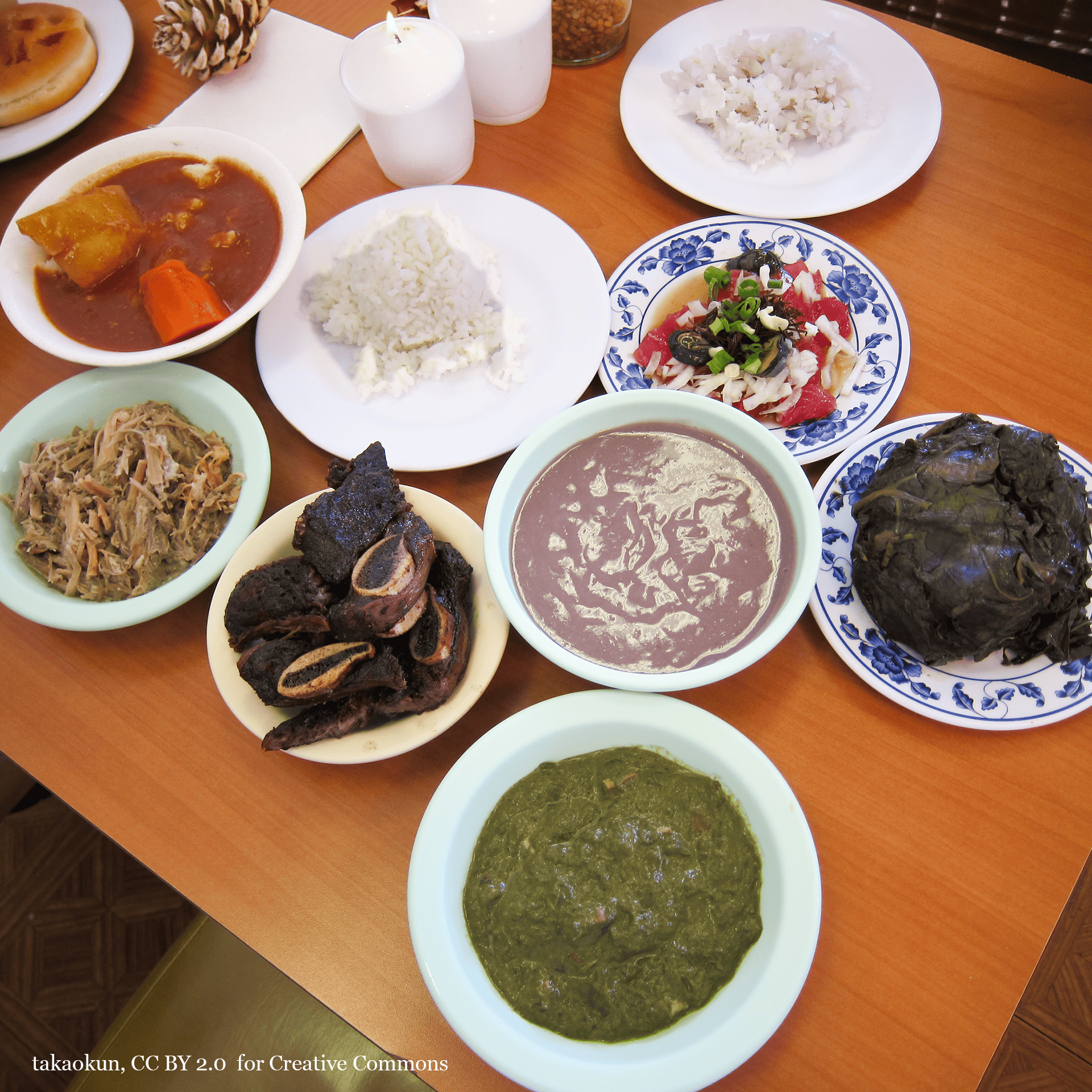
Imagine arriving at a Hawaiian lūʻau. There's kalua pig, poi, laulau, fresh fish, tropical fruit, and perhaps haupia for dessert. Music is playing, dancers are performing, and everyone is gathered around a communal feast.
But the luau is far more than a tourist attraction. It has a much older story. Let's start with how Hawaiians ate before the luau.
*This post contains affiliate links. If you make a purchase through these links, I may earn a small commission at no additional cost to you. I earn from qualifying purchases. Thank you for supporting this site and helping me keep ancient food stories alive. Learn more.*
Ancient Hawaiian Agriculture & Food Culture
Think of Hawaiian food, and you picture a plate of kalua pork, maybe a luau buffet, or a Spam musubi. But you are only getting part of the story.
Hawaiʻi's food culture is a fascinating culinary history. It includes many layers of foodways from Hawaiians, Polynesians, and waves of immigrants from Asia, Portugal, and elsewhere.
And at the heart of it all is a remarkable relationship between people, land, and sea.
The Ahupuaʻa System
To research for this article, I journeyed down a bit of memory lane. I also read a few papers to make sure I was staying true to the traditions. I'll start with the ahupuaʻa, a traditional Hawaiian land division that often stretched from the mountain ridges to the sea. The system was designed to let communities access a broad range of resources.
At Kaloko-Honokōhau on Hawaiʻi Island, archaeological evidence shows how Hawaiian communities combined agriculture, fishing, and aquaculture in the ahupuaʻa system. This traditional land division extends from the mountains to the sea.
The traditional Hawaiian food system was one interconnected system. They really understood conservation better than any of us.
The Ocean Is A Pantry
Hawaiian cuisine was more than farming. Fish, shellfish, seaweed, and salt were also essential parts of the diet. Hawaiians became highly skilled fishermen and developed sophisticated systems for managing marine resources.
A remarkable example is the loko iʻa, or traditional Hawaiian fishponds.
These were methodically constructed systems for raising and managing fish, incorporating an intricate system of walls, channels, and traps.
Polynesian Travelers
Polynesian voyagers began settling the Hawaiian Islands around 1,000–1,200 CE. They brought plants and animals they needed to establish a new life in the islands.
Among them were kalo (taro), ʻuala (sweet potato), bananas, coconut, breadfruit, sugar cane, pigs, dogs, and chickens.
Once established, Hawaiians developed an agricultural system suited to the islands' different environments. One crop became essential: the taro, or kalo.
The Sacred Kalo
Kalo is deeply rooted in Hawaiian culture and identity. Hawaiians cooked and pounded its pulp with water to make poi, a staple of the traditional Hawaiian diet. Calling poi simply a "side dish" misses its cultural importance.
The Imu's Smoky History
The "Imu" is a traditional underground oven. Heated stones are placed in a pit, followed by layers of food and leaves, then it's covered again with more leaves and soil. The food cooks slowly in the intense heat and steam; this process creates that yummy texture and distinctive smoky flavor associated with dishes such as kālua pig.
This is the ancestor of the kalua cooking method, the famous Hawaiian style of cooking meat slowly in an underground oven.
Giving Back To Nature
This ecologically sound system was about feeding families and surviving. Agriculture and food production were an essential part of religion and social organization. Planting, tending, and harvesting crops were accompanied by ceremonies.
The Feast that Changed Hawaiian Tradition
The Hawaiian word ʻAhaʻaina is a ceremonial feast or gathering centering on food, community, and celebration. But ancient Hawaiian feasting was governed by the powerful religious system known as kapu, a set of sacred restrictions that shaped nearly every aspect of daily life. One of the most important rules forbade men and women from dining together, and certain foods were reserved for people of high rank.
In October 1819, King Kamehameha II (Liholiho) publicly ate with women, including the influential Queen Kaʻahumanu and Queen Keōpūolani. This was a huge departure from tradition. The act broke the ʻai kapu restrictions and ushered in a period known as ʻai noa, or 'free eating'. Yay for us women!
Of course, this mattered because food was deeply connected to religion, social rank, and political power. So men and women dining together challenged an important part of the existing order. The traditional kapu system was subsequently dismantled, even though Hawaiian religious practices and beliefs did not simply disappear overnight.
Over time, Hawaiian feasting changed as indigenous traditions blended with new foods, customs, and influences introduced by foreigners. What we recognize today as a Hawaiian luau grew from the tradition of communal feasting. A celebration where food, music, family, hospitality, and Hawaiian culture come together around the table.
Where Did The Word "Luau" Come From?
Interestingly, luau originally referred to food, not a feast. The word described the young, tender leaves of the kalo (taro) plant, an important crop in traditional Hawaiian life. The leaves were used in dishes prepared with coconut milk and meats like chicken, pork, or squid.
The Difference Between Historical and Modern Luau
The traditional luau was once called 'aha'aina meaning a gathering for a meal. The elaborate communal feast featured traditional music and hula dancing.
The Traditional Luau Foods:
- Poi — pounded kalo/taro
- Kālua pig — traditionally cooked in an imu
- Laulau — meat or fish wrapped in leaves and steamed
- Poke — traditionally cubed raw fish, seasoned simply
- ʻUlu — breadfruit
- ʻUala — sweet potato
- Lomi salmon — later influence, not an ancient Hawaiian dish
- Haupia — coconut dessert
- Lūʻau — taro leaves cooked into a dish
- Pipikaula — Hawaiian-style dried beef
A Hawaiian luau today may contain foods with very different histories. Some are ancient Hawaiian staples; others arrived later with immigrants and became part of the islands' local food culture. Together, they tell the story of how Hawaiian cuisine evolved.
The Modern Luau: Let's Make The Distinction
The modern tourist luau is not the same thing as a traditional Hawaiian feast. It evolved into a commercial and cultural experience, particularly with the growth of tourism.
Instead of "authentic vs. inauthentic," I'd rather say that the luau itself has evolved. But food still remains at its center.
Native Hawaiian cuisine refers to the food traditions of the indigenous Hawaiian people, including foods such as kalo, poi, ʻuala, and other foods prepared in original methods.
This is the luau I enjoyed during my visit to Hawaii. Touristy, but well worth it. The familiar term for the Hawaiian celebration is a gathering celebrating food, music, family, hospitality, and cultural traditions.
Let's Not Forget Spam and the Plate Lunch
Spam demonstrates Hawaii's ability to reinvent outside influences. The canned meat became popular in World War II and was added to local dishes. Spam musubi is the perfect example: grilled Spam and rice are wrapped with nori.
Now, the plate lunch isn't an ancient Hawaiian dish. It emerged from Hawaiʻi's multicultural plantation era and became one of the islands' defining casual foods. Made with two scoops of rice, macaroni salad, and a meat or fish entrée.
It's an edible history lesson comprising Native Hawaiian, Asian, European, and American influences meeting on one plate.
Like Spam musubi, the plate lunch shows how Hawaiʻi's food culture continued to evolve. Foods and cooking traditions brought by immigrant communities didn't simply remain separate; they mingled and became part of what is now known as local Hawaiian food.
This creativity is exactly what makes Hawaiian food history so fascinating.
Foods that arrived from elsewhere didn't simply replace traditional Hawaiian foods. They became part of the constantly evolving diet.
Hawaiʻi's broader dining culture includes the foods that developed through centuries of Native Hawaiian, Asian, Portuguese, American, and other influences.
The two histories overlap, but they aren't interchangeable.
If you visit Hawai'i, you'll experience migration, agriculture, labor, and cultural survival through food.
Explore more in our Food Spotlights or subscribe to our newsletter for weekly stories and recipes inspired by history. Taste the rest of the story.
Selected Sources and Further Reading
- Kalo, a traditional staple in Hawai‘i
- Nihopeku – Kalo, a traditional staple in Hawai‘i
- Library of Congress – Hawaii: Life in a Plantation Society
- Image by takaokun, CC BY 2.0, via Wikimedia Commons
Note to my readers:
My research draws on travel experiences, books, and, sometimes, AI tools. I love using my own photos whenever possible, but occasionally I include stock or AI-generated images to help illustrate the story.
Still Intrigued By The Menu?
Subscribe to our newsletter for the freshest bites of food history, culture, and exclusive features.
Still hungry for history?
Let’s Connect
About Food Culture Bites
Food Culture Bites is a food history and culture website dedicated to exploring how food becomes identity. We tell the stories behind the dishes and traditions that shape past and present communities. Read more.>
Meet Janette Speyer

Behind every bite, there’s a story. Join me on a journey through history to explore how centuries of culture have shaped the way we eat. Read More >
Meet Bob Speyer

Bob Speyer is a writer and contributor to Food Culture Bites, bringing a lifetime of global experience, storytelling, and cultural insight to the publication. Having traveled to more than 60 countries, Bob writes with a deep appreciation for how history, food, and human connection intersect across cultures. Read More >