
Black Friday: The Day of Chaos That Became a Shopping Tradition
It’s that time of year! I’ve got my shopping list ready, with items I have been eyeing all quarter. Every November, millions of people search for bargains. Camping outside stores or filling online shopping carts with discounted holiday gifts is commonplace. Black Friday has become as much a part of Thanksgiving weekend as turkey and pumpkin pie.
How did the day after Thanksgiving become a shopping holiday? And why this name?
The holiday is more about a dark history than bargain hunting.
*This post contains affiliate links. If you make a purchase through these links, I may earn a small commission at no additional cost to you. I earn from qualifying purchases. Thank you for supporting this site and helping me keep ancient food stories alive. Learn more.*
It Started with a Financial Disaster
The expression “Black Friday” actually predates holiday shopping by almost a century.
On September 24, 1869, two Wall Street financiers, Jay Gould and James Fisk, tried to manipulate the American gold market. They bought enormous quantities of gold, hoping to drive up its price and make a fortune.
The government intervened, and the scheme collapsed. Gold prices plunged, triggering financial panic. The day became known as Black Friday.
The expression became widely used, and it had absolutely nothing to do with shopping or bargains.
Philadelphia Police and the Birth of Black Friday
The connection between Black Friday and Thanksgiving goes back to Philadelphia in the 1950s and early 1960s.
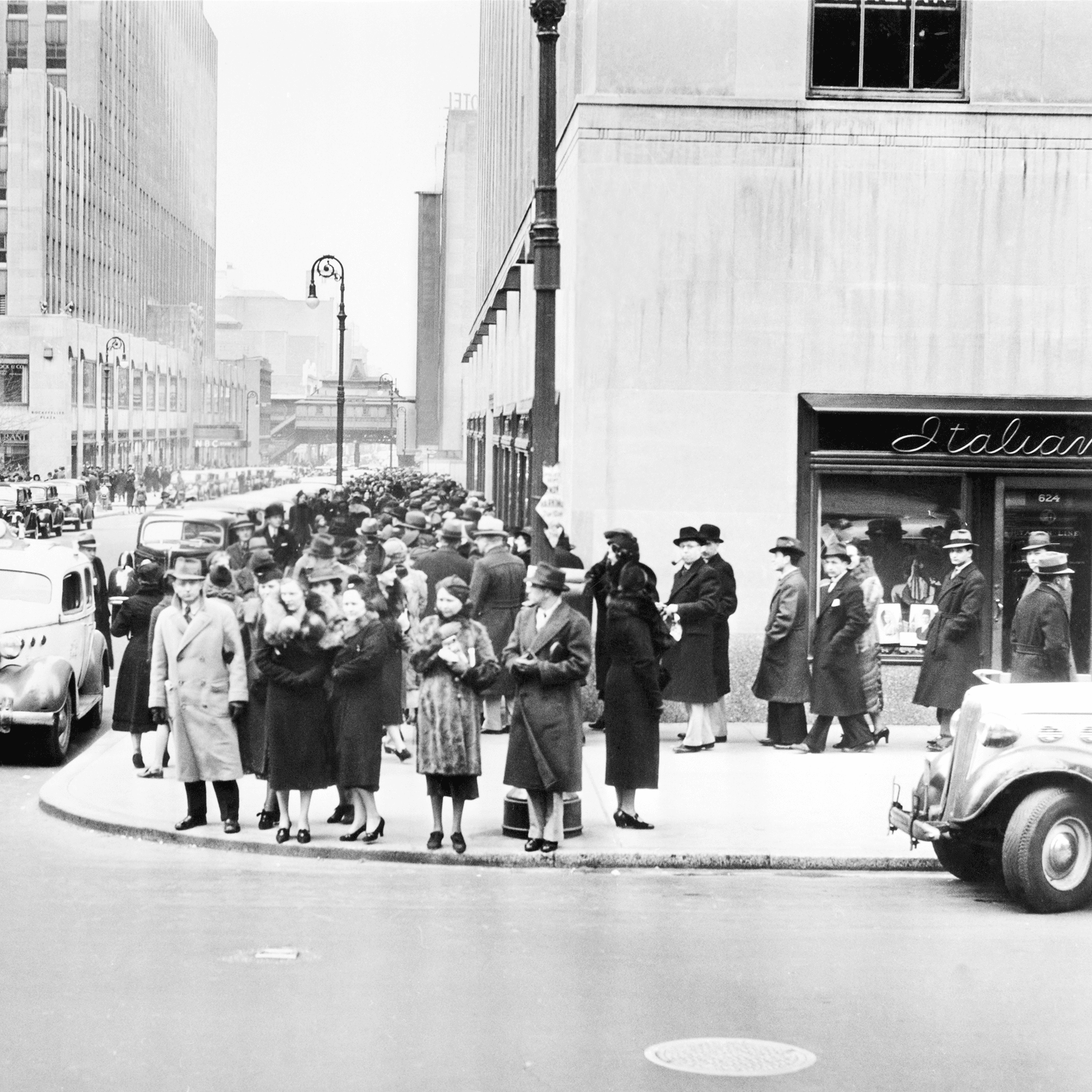
The day after Thanksgiving was anything but quiet. Shoppers poured into the city to get a head start on Christmas shopping, while football fans arrived for the annual Army-Navy game, traditionally played on the Saturday after Thanksgiving.
Imagine the scene: traffic backed up, sidewalks packed, department stores overflowing, and police officers dealing with it all.
According to historical accounts, Philadelphia police officers started using the name “Black Friday” to describe the chaos. It meant longer shifts, traffic headaches, unruly crowds, and even more shoplifting. Not exactly a holiday for the police department!
We don’t really know who first used the expression or when. But by 1961, it was familiar enough to trouble local merchants. They weren’t particularly fond of the gloomy name and tried to give it a more cheerful makeover: “Big Friday.”
That name didn’t catch on. Black Friday was here to stay.
Turning a Negative into a Marketing Opportunity
Retailers eventually found a much more attractive explanation for the name.
Here’s a good explanation: Black Friday is the day when stores move from being “in the red” (operating at a loss) to “in the black” (making a profit). This concept certainly helped turn an unappealing name into a marketing success.
This wasn’t the original meaning. The red-to-black explanation became popular decades after the Philadelphia police had adopted the term.
By the 1980s, retailers had embraced Black Friday as a celebration of shopping and the start of the Christmas retail season.
Thanksgiving Became the Start of Christmas Shopping
Thanksgiving and Christmas shopping have their own history.
By the early 20th century, retailers wanted the Christmas shopping season to begin as early as possible. In 1939, President Franklin D. Roosevelt moved Thanksgiving from the last Thursday in November to the fourth Thursday. Merchants gained an additional week of holiday shopping.
The decision was controversial. Some Americans even called the earlier celebration “Franksgiving.”
Congress eventually settled on a date in 1941. Thanksgiving was established as the fourth Thursday in November, which it still is today.
Retailers could now count on a consistent calendar for the holiday shopping season.
From Department Store Lines to Online Shopping
For decades, Black Friday was mostly an in-store event. Department stores advertised special offers. Newspapers filled their pages with sales circulars. Shoppers planned their routes around the biggest discounts.
By the 1990s and early 2000s, the event had become a national phenomenon. Stores opened earlier. Sometimes at midnight, and shoppers lined up for hours hoping to find huge sales.
Then came the internet.
In 2005, the term Cyber Monday came about to describe the online shopping surge that followed Thanksgiving weekend. What had once been a single day of shopping gradually expanded into a weekend of promotions.
Today, we are bombarded with Black Friday sales weeks before Thanksgiving. Thanks to online shopping, I can now put all my holiday needs in one tidy basket and just press “buy now.”
How Black Friday Went Global
Black Friday crossed the Atlantic, and it didn’t take long for the rest of the world to take notice.
Americans were among the first to export the idea. In 2009, U.S. retailers introduced Black Friday promotions in Canada, where Thanksgiving takes place in October. The following year, Amazon brought the event to the United Kingdom, offering British shoppers a taste of the American discount tradition. Apple and other American retailers helped introduce it to Australia in 2011.
The internet made the expansion even easier. Retailers no longer needed to open physical stores abroad. Online shopping platforms could promote American-style sales events to customers thousands of miles away. Trust me, they buy.
It followed me on a trip to the UK to see my family. Guess what I had to do? Yes, go shopping. In Britain, Black Friday really took off in 2013, when Asda, then owned by America’s Walmart, introduced large in-store promotions. Enthusiastic crowds created chaotic scenes, and police were called to manage shoppers competing for discounted merchandise. This was a bit of a shocker for me, as I am used to sales in the UK and fighting for trinkets, but this was another level of hysteria.
In Brazil, Black Friday took hold around 2010 and became an important event in the country’s online shopping calendar. It also spread through Europe, South Africa, Australia, and other markets, often with local retailers adopting the American name and late-November timing.
But not every country simply copied the American formula.
How Other Countries Made Black Friday Their Own
Mexico had its own November shopping event, El Buen Fin (The Good Weekend), with a much more positive name in 2011. Created through cooperation between government and business organizations, it was designed to encourage consumer spending and support the economy.
In the Middle East, retailers adapted the name to White Friday; the word black carries negative associations in the region. The shopping event follows a similar late-November promotional calendar.
China already had a major online shopping day called Singles’ Day, celebrated on November 11. Originally for singles, e-commerce giant Alibaba transformed the date into an enormous shopping event beginning in 2009. It now competes with Black Friday for shoppers’ attention.
Today, Black Friday no longer relies on Thanksgiving. It’s a global marketing event, with countries adopting, adapting, and sometimes reinventing the idea.
A Philadelphia shopping tradition has become an international phenomenon.
Explore more in our Food Spotlights or subscribe to our newsletter for weekly stories and recipes inspired by history. Taste the rest of the story.
Selected Sources and Further Reading
- US Bureau of Labor Statistics — How have the pandemic and online spending affected Black Friday shopping? Analyzing retail trade margins 2009–22
- History.com — What’s the Real History of Black Friday?
- GBH — How Black Friday Got Its Name — It’s Not What You Think
Note to my readers:
My research draws on travel experiences, books, and, sometimes, AI tools. I love using my own photos whenever possible, but occasionally I include stock or AI-generated images to help illustrate the story.
Still Intrigued By The Menu?
Subscribe to our newsletter for the freshest bites of food history, culture, and exclusive features.
Still hungry for history?
Let’s Connect
About Food Culture Bites
Food Culture Bites is a food history and culture website dedicated to exploring how food becomes identity. We tell the stories behind the dishes and traditions that shape past and present communities. Read more.>
Meet Janette Speyer

Behind every bite, there’s a story. Join me on a journey through history to explore how centuries of culture have shaped the way we eat. Read More >
Meet Bob Speyer

Bob Speyer is a writer and contributor to Food Culture Bites, bringing a lifetime of global experience, storytelling, and cultural insight to the publication. Having traveled to more than 60 countries, Bob writes with a deep appreciation for how history, food, and human connection intersect across cultures. Read More >